Google is Paying to Build AI Agents
Google is investing heavily in AI agent infrastructure. Here is what that means for builders.
Google is investing heavily in AI agent infrastructure. Here is what that means for builders.
Free resources that teach AI better than most paid courses. Save your money.
Claude usage analytics tool breakdown — track tokens, costs, and optimize your AI spend.
MCP connector from Higgsfield enables mass ad creative generation with AI agents.


Another ChatGPT trend is here People are turning their profiles into cute crayon-style cartoons using ChatGPT. The idea is simple. Upload a screenshot of your profile, paste the prompt, and let the model redraw the whole page as if it was made with crayons on white paper. The result keeps the profile layout, but turns the details into a playful handmade version filled with sweet childlike elements. It works because the output feels personal, nostalgic, and instantly shareable. Would you try this with your own profile?

Two recent Federal Circuit decisions—Teva v. Eli Lilly and In re Xencor—clarify what patent specifications must disclose for method-of-use claims involving known compound genera under 35 U.S.C. § 112. Teva upheld claims where the genus was well-known and all members worked for the specific therapeutic use, while Xencor rejected broad, undifferentiated treatment language lacking evidentiary support. The article distills five practical drafting and prosecution lessons emphasizing claim specificity, documented known-in-the-art status, mechanistic rationale, careful claim format selection, and evidentiary record preservation.
See more
A former Google DeepMind employee proposes a governance framework for AI companies contracting with government entities, establishing two red lines: human control over targeting and use of force, and no untargeted AI profiling. The framework includes a seven-person Defense AI Review Body that assesses contract compliance with yearly transparency reports to prevent quiet dismantling. The author invites discussion on improving the framework as corporate governance and its potential to inform future legislation.
See more
The openFDA adverse event API hard-caps skip at 25,000, but the Link header's search_after cursor bypasses this limit entirely — measured at 31,968 records across 32 pages with zero duplicates. The critical trap: any non-zero skip silently degrades the cursor, so you must start with skip=0 or absent. Without an API key, limit maxes at 999; limit=1000 returns a misleading 403 API_KEY_MISSING error. The article includes production-ready JavaScript with retry logic, deduplication via safetyreportid+version+date composite keys, and a detailed error-code reference table.
See more
This survey examines LLM unlearning as a cyber defense strategy, addressing how deployed models retain sensitive data, copyrighted material, and hazardous knowledge across billions of parameters. It focuses on gradient-based methods that dominate the field due to their scalability and compatibility with existing training pipelines. A central unresolved question is whether current methods truly remove knowledge or merely suppress its expression under normal prompting.
See more
A federal judge approved Anthropic's $1.5 billion class action settlement with authors who accused the company of training AI on copyrighted books. Authors receive approximately $3,000 per allegedly pirated book, marking the largest known copyright recovery in history. The case sets a significant precedent for AI training data and intellectual property rights.
See moreThis arXiv paper critically analyzes tools and trust mark frameworks for operationalizing trustworthy AI, using OECD data to map asymmetries in ethical focus, lifecycle coverage, and stakeholder targeting. It finds heavy emphasis on fairness, transparency, and robustness but neglect of explainability, digital security, and environmental sustainability, with most tools concentrated on post-development stages. The authors recommend expanding ethical objectives, embedding ethics across the AI lifecycle, and fostering broader multi-stakeholder participation to bridge the principles-to-practice gap.
See more
The European Commission fined AliExpress 550 million euros for failing to prevent unsafe and counterfeit products on its platform, the largest penalty under the Digital Services Act to date. AliExpress is reviewing the decision and must submit a remediation action plan by October 20. The fine signals intensifying EU enforcement against online marketplaces.
See more
New research from MIT Technology Review suggests that LLMs used in hiring can develop biases beyond those inherited from training data, creating novel forms of discrimination in resume screening. AI systems are increasingly used to filter job applicants before human review, raising fairness concerns. The findings highlight that AI hiring tools may introduce unpredictable biases that differ from human ones.
See more
A VentureBeat survey of 107 enterprises finds 54% have already experienced a confirmed AI agent security incident or near-miss, yet only 32% give each agent its own scoped identity and most agents share credentials. Security stacks are overwhelmingly borrowed from model providers rather than purpose-built for agents, with satisfaction high despite thin spending. A majority of enterprises plan to change tooling within the year, revealing satisfaction with controls they are simultaneously preparing to replace.
See more
Waymo and Swiss Re data show driverless vehicles are substantially safer than human drivers within their operating domains, with over 220 million miles driven across LA, San Francisco, and Phoenix. Despite this safety evidence, trial lawyers are lobbying against autonomous vehicles. The post highlights the tension between proven safety benefits and entrenched legal interests opposing the technology.
See more
Ben Horowitz and a16z leaders discuss why American tech leadership matters globally, exploring how AI infrastructure, cybersecurity, and startup expansion shape geopolitical power. The conversation examines a16z's strategy to help founders scale internationally and the role of Western technology in government partnerships. Key themes include tech as an arena of national power and fostering trusted global partnerships.
See moreSafe-Psych is a sequential benchmark evaluating how LLMs handle evolving diagnostic uncertainty in clinical psychiatry, using over 1,000 real-world psychiatric notes with psychiatrist-derived action labels (DIAGNOSE, CLARIFY, ABSTAIN). Findings reveal that even strong models exhibit over 60% under-abstention, frequently diagnose before sufficient evidence is available, and rarely seek clarification unless explicitly prompted. Safety-aware prompting shifts errors toward excessive abstention rather than improving calibration. The benchmark is released to support LLM safety research in healthcare.
See more
Claude Fable 5 is now available on Vercel's AI Gateway after US export controls were lifted, with updated safety classifiers that may require configured fallback models for coding tasks. Data is retained 30 days for abuse detection but not used for training; Zero Data Retention is unsupported. Use model name `anthropic/claude-fable-5`.
See more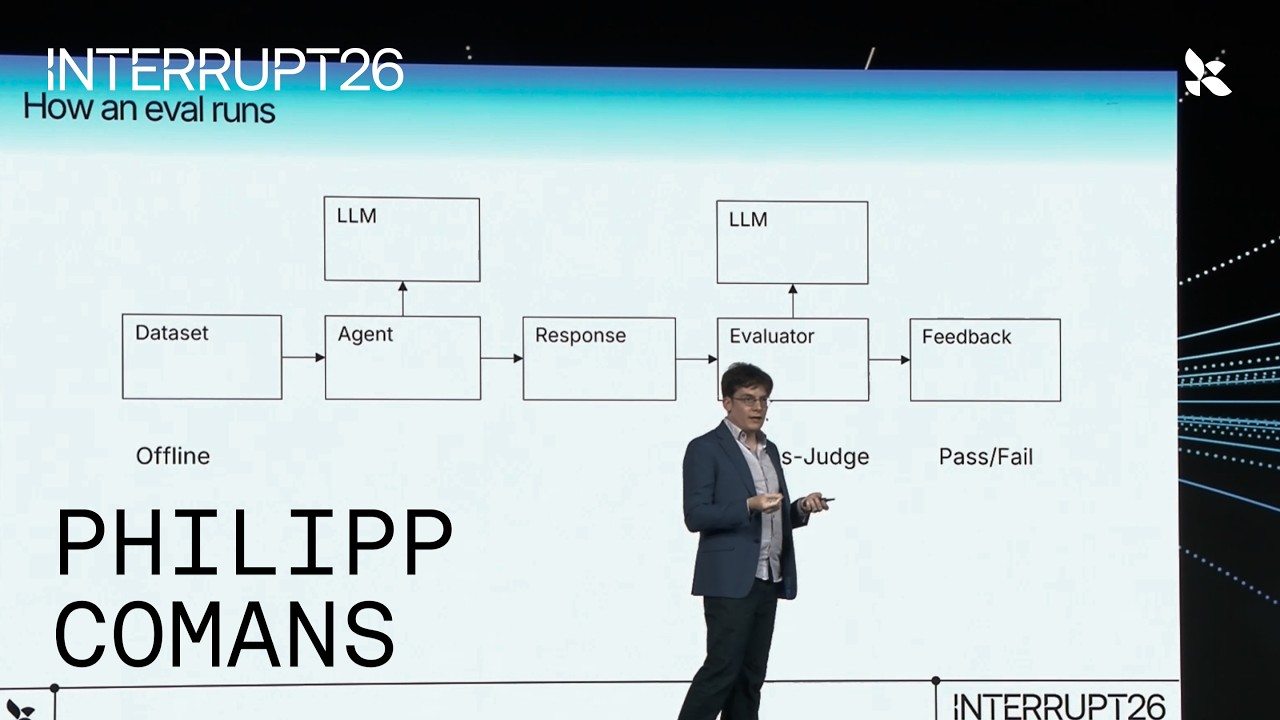
Chime solved the 'language barrier' between engineers and compliance by structuring regulatory risk as a taxonomy both teams could understand and extend. Using Giskard to generate adversarial test cases and LangSmith for cross-functional visibility, they turned legal into active co-authors of their eval pipeline. This shifted compliance from a release gate to continuous alignment, enabling faster shipping with regulatory confidence.
See more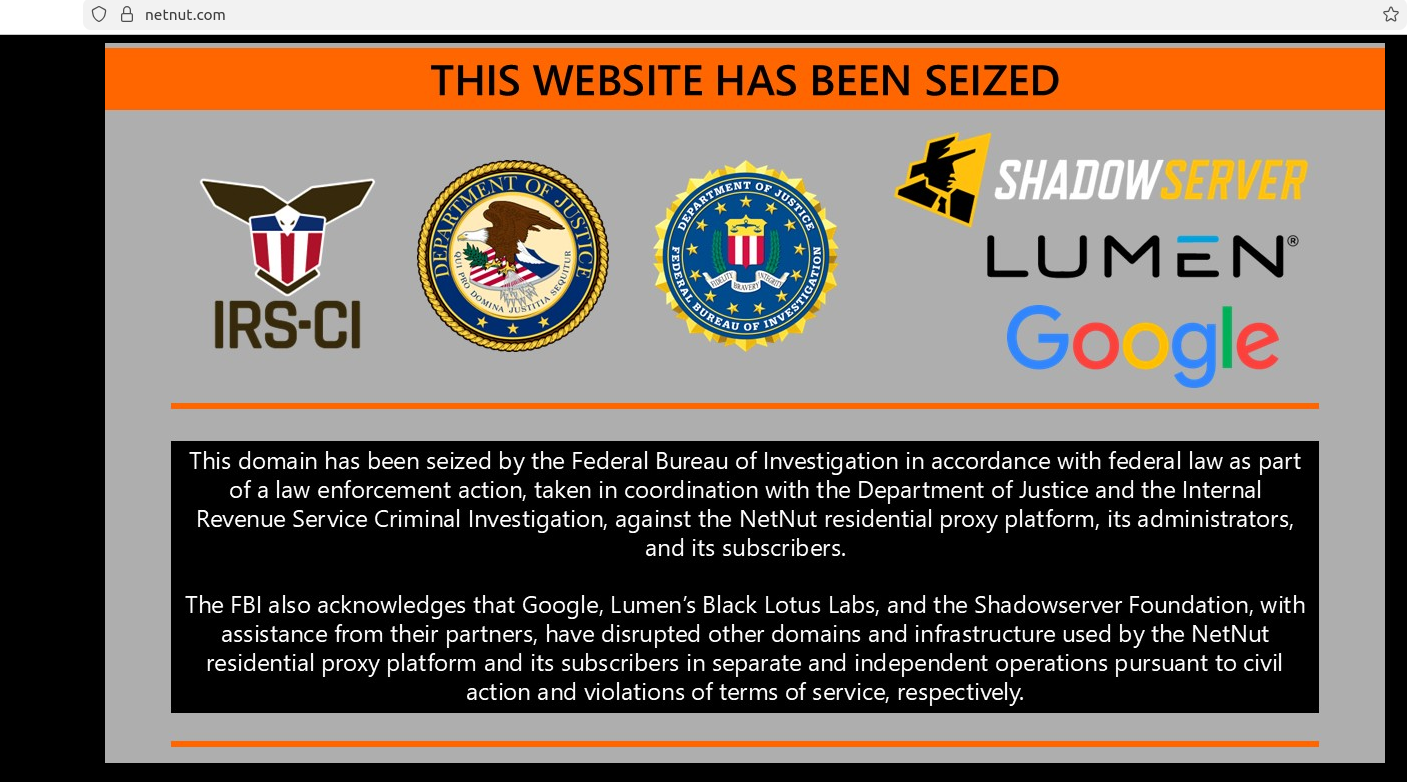
The FBI seized domains operated by NetNut, a residential proxy service linked to the Popa botnet controlling 2+ million compromised devices without victim consent. This coordinated law enforcement action targets infrastructure enabling large-scale malware distribution.
See more
US Treasury analysts labeled AI a systemic risk, warning a downturn would ripple through stocks, private credit, data-center debt and utilities—though Treasury distanced itself from the conclusion. The ECB ordered European banks to prove resilience to AI-driven shocks by October 31, and the UK placed AWS, Google Cloud, Microsoft and Oracle under critical-infrastructure supervision. The issue also covers Meta's face-recognition glasses, AI's impact on jobs, and early audits of AI dependence in education and healthcare.
See more
A June 2026 White House Executive Order on cryptographic security signals regulatory momentum for enterprise security migrations. Security and risk leaders should treat this as a leading indicator for PQC migration planning and procurement strategy. Organizations acting early will position themselves ahead of federal compliance deadlines cascading through supplier ecosystems.
See more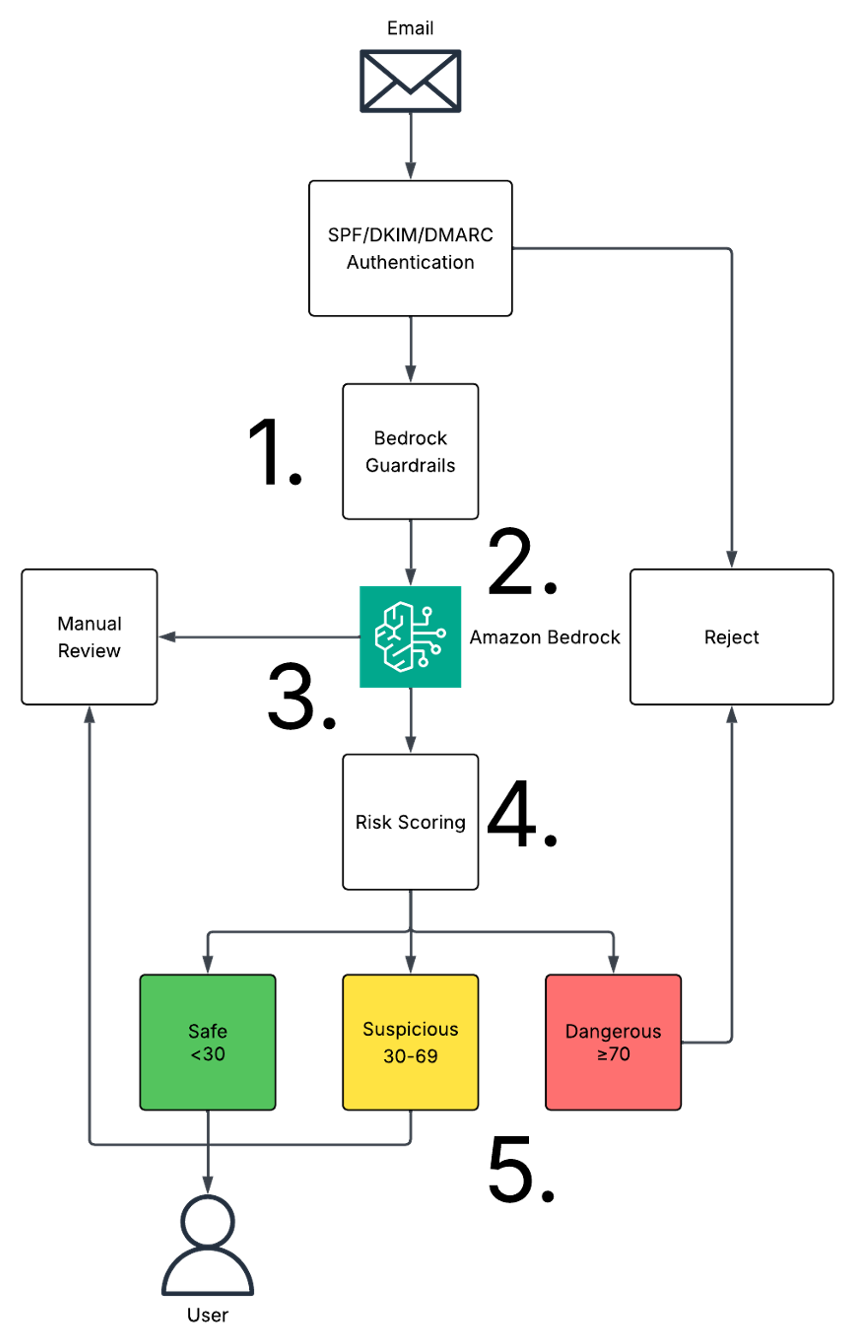
Amazon Bedrock now detects AI-generated phishing emails by analyzing advanced generative AI patterns and open-source intelligence (OSINT). This directly counters rising threats from sophisticated, machine-crafted social engineering campaigns that evade traditional email security. Organizations can leverage Bedrock's detection models to identify and block these threats at scale.
See more
Boz interviews Palantir CTO Shyam Sankar on AI-driven industrial reinvention, discussing innovation frameworks, organizational culture, and projected job creation. Covers shared military service context and strategic implications of AI for American industrial capacity.
See more
Recorded at Microsoft Build, this podcast episode features Sarah Bird, Microsoft's Chief Product Officer for Responsible AI, discussing the NIST approach to building responsible AI. The conversation covers why irresponsible AI often stems from experimentation without considering impact, and how Microsoft is researching human/AI workflow design to reduce unnecessary escalation. The episode provides strategic and tactical guidance for AI practitioners.
See more