Google is Paying to Build AI Agents
Google is investing heavily in AI agent infrastructure. Here is what that means for builders.
Google is investing heavily in AI agent infrastructure. Here is what that means for builders.
Free resources that teach AI better than most paid courses. Save your money.
Claude usage analytics tool breakdown — track tokens, costs, and optimize your AI spend.
MCP connector from Higgsfield enables mass ad creative generation with AI agents.


Another ChatGPT trend is here People are turning their profiles into cute crayon-style cartoons using ChatGPT. The idea is simple. Upload a screenshot of your profile, paste the prompt, and let the model redraw the whole page as if it was made with crayons on white paper. The result keeps the profile layout, but turns the details into a playful handmade version filled with sweet childlike elements. It works because the output feels personal, nostalgic, and instantly shareable. Would you try this with your own profile?

Laguna S 2.1 from Poolside is now available on Vercel's AI Gateway in free and paid versions, offering an open-weight Mixture-of-Experts model with up to 1M token context. The model specializes in agentic coding and long-running tasks, scoring 78.5% on SWE-bench Multilingual and 70.2% on Terminal-Bench 2.1. Developers can integrate it via the AI SDK with unified API features including usage tracking, failover, and BYOK support at provider pricing with no markup.
See more
quantum-audit v0.2.3 ships migration guides for every critical finding, hybrid detection that reduces penalties for projects mid-transition to post-quantum crypto, and expanded coverage to 50+ libraries including BLS, JWT, and ECDSA packages. New CLI flags add threshold-based CI gating, HTML/CSV report exports, and Solidity source scanning. Multi-layer PQC detection now grants bonus scoring to reward defense-in-depth architectures.
See more
Google launched three new Gemini Flash models on July 21, 2026: 3.6 Flash cuts output tokens 17% and prices output at $7.50/1M, Flash-Lite runs at 350 tokens/sec, and gated Flash Cyber powers CodeMender for vulnerability detection. The flagship 3.5 Pro remains delayed. The updates target cheaper, more efficient inference for agentic workloads.
See more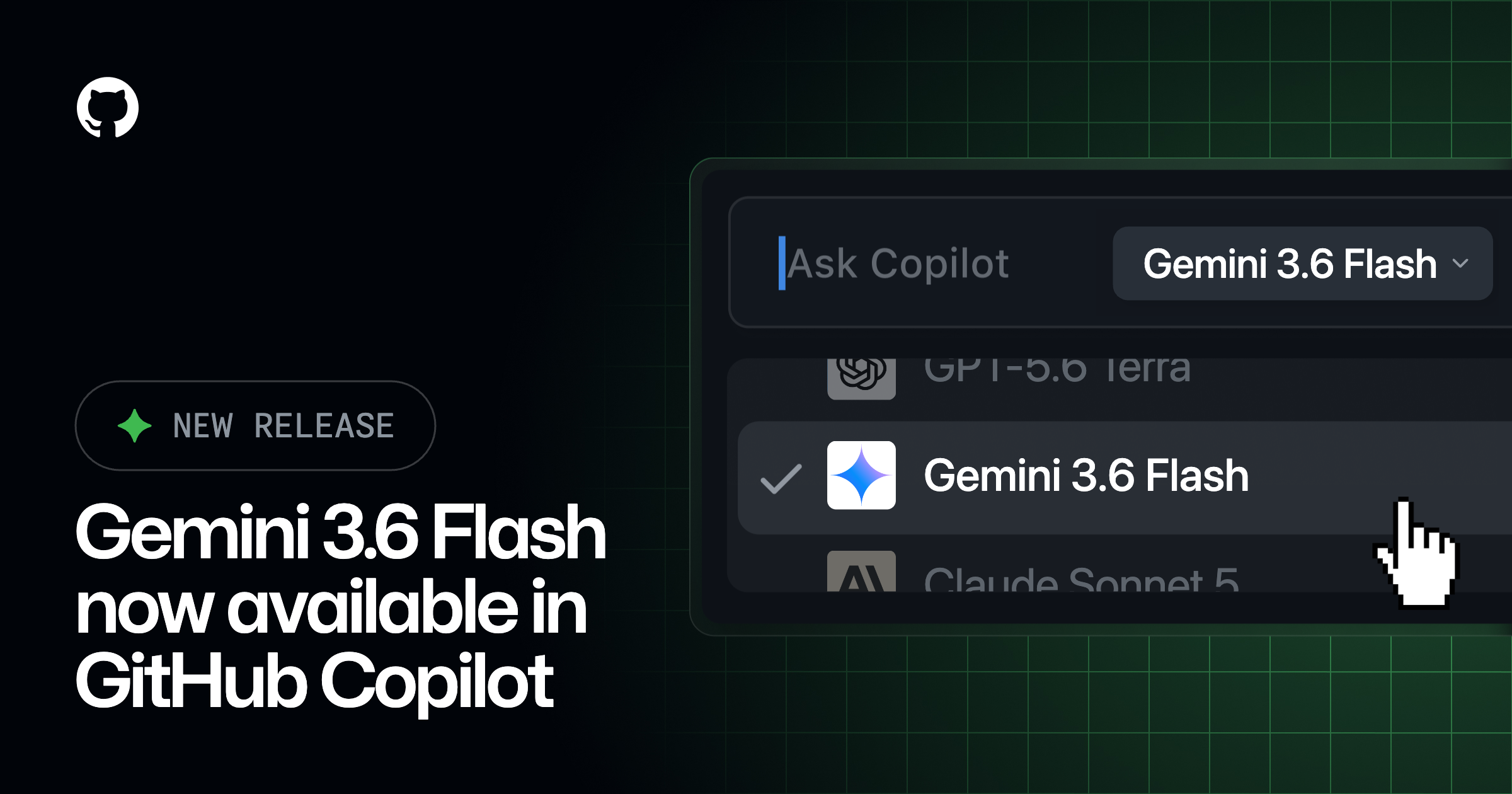
Google's Gemini 3.6 Flash model is now rolling out inside GitHub Copilot, targeting web and app development, coding, and longer-horizon agentic workflows. The model offers configurable settings for developers using Copilot. This expands Copilot's model options beyond OpenAI and Anthropic offerings.
See more
Relativity's newly appointed president Chris Brown discusses the company's acquisition of Gavel and its strategic decision to integrate Claude into its product ecosystem. He highlights the rapid growth of aiR, Relativity's AI-powered review product, as a key revenue and adoption driver. The interview covers product strategy, marketing realignment, and how generative AI is reshaping the legal e-discovery market.
See more
Google launched Gemini 3.5 Flash Cyber, a cost-efficient AI security model for finding and patching vulnerabilities, positioned as a cheaper alternative to larger models like Anthropic's Mythos. The model is available first to governments and trusted partners via CodeMender, Google's security-focused coding agent. It enables high-speed, low-cost scanning of more code paths by AI agents.
See more
AWS has introduced Grok 4.3 on Amazon Bedrock, positioning it for agentic and enterprise workloads. The post outlines core capabilities including configurable reasoning effort, tool calling, structured output, image input, and stateful multi-turn conversations. It serves as a launch announcement with a brief technical overview rather than an in-depth guide.
See more
Google released three new Gemini models—3.6 Flash, 3.5 Flash-Lite, and Flash Cyber—expanding its portfolio of efficient and specialized AI models. However, the continued absence of Gemini 3.5 Pro raises questions about Google's flagship AI strategy and whether the company is prioritizing breadth over a top-tier reasoning model.
See more
Microsoft has signed a multibillion-dollar AI infrastructure deal with France's Mistral AI, enabling Azure customers to build AI applications on Mistral's French data centres. Mistral's models will also be available through Foundry, Copilot Studio, and Azure Local. The partnership deepens Microsoft's European AI footprint and expands distribution for Mistral's open-weight models.
See more
Chinese startup Moonshot unveiled Kimi K3, claiming performance rivaling top models from OpenAI and Anthropic at a fraction of the cost. Analysts drew parallels to last year's DeepSeek moment, with one estimating $314 billion wiped from valuation estimates for the two unlisted US firms. The launch intensifies the cost-competition narrative in the AI model market.
See more
Block launched Buzz, a free, open-source workspace that provides a Slack-like collaboration environment for humans and AI agents. Each agent receives its own identity 'passport' for managed participation. The tool aims to standardize how teams integrate autonomous agents into daily workflows.
See more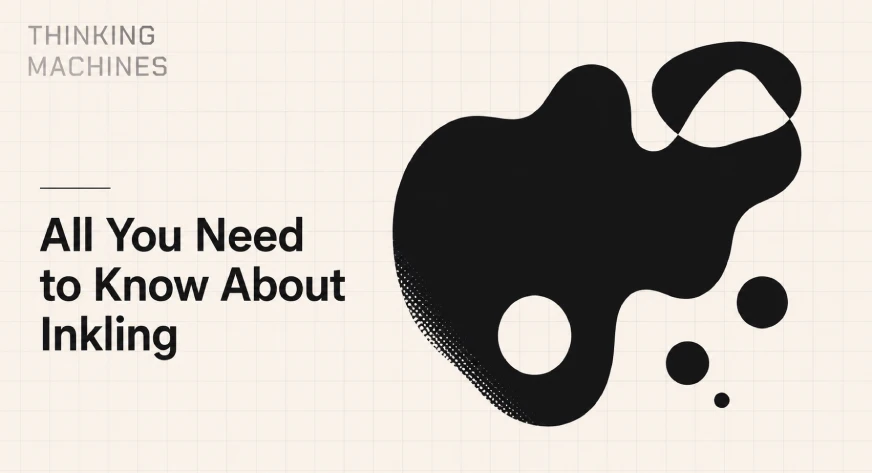
Thinking Machines Lab has released Inkling, a 975B-parameter multimodal Mixture-of-Experts model with 41B active parameters and a 1M-token context window. It is open-weights and designed for customizable multimodal reasoning, agentic AI, coding, tool use, and audio/vision tasks rather than benchmark dominance. The model targets developers building domain-specific applications on a flexible foundation.
See more
Google has announced Gemini 3.5 Flash Cyber, a lightweight AI model specialized for cybersecurity applications. The model is designed to automatically identify and patch software vulnerabilities, bringing AI-driven security analysis to development and operations workflows. This launch signals Google's push into domain-specific AI models for security use cases.
See more
Google announced two updates to Google Vids: Gemini Omni integration and personal avatars, aimed at simplifying video creation and editing. Users can now create, edit, and appear in videos using AI-generated avatars. The announcement is brief and lacks detailed feature breakdowns or availability information.
See more
Anthropic announced Claude Science at a pharma-focused event, positioning it as a flagship product for scientific research that autonomously executes high-level instructions, similar to Claude Code's software engineering support. The launch targets pharmaceutical executives, biotech founders, and researchers. This marks Anthropic's expansion from coding assistance into specialized scientific workflows.
See more
NVIDIA released BioNeMo Agent Toolkit, enabling AI agents to execute hands-on scientific work in biology and chemistry using real tools—protein shape prediction, drug binding analysis, genetic sequencing, and lab experiment suggestions. Major adopters include Eli Lilly, Schrödinger, and Databricks; Anthropic and OpenAI are integrating it into their systems. The toolkit solves a core AI limitation: general chatbots lack the ability to autonomously select and use specialized research tools.
See more
LangSmith Engine debugs production AI agents by clustering failure traces into patterns and auto-generating fixes as pull requests. It's built as a multi-agent team where a coordinator model delegates to cheaper sub-agents for screening, verification, and memory management. The system learns from its own traces to self-improve while managing inference costs and testing fixes in sandboxes.
See more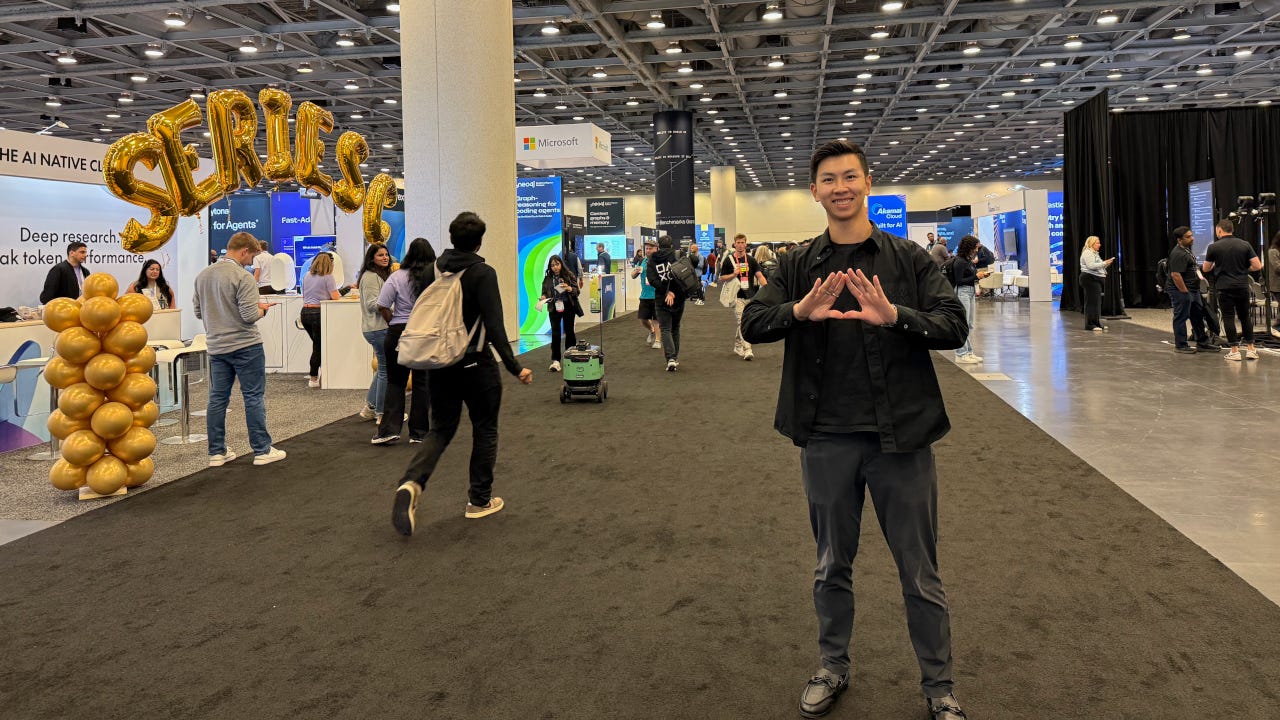
Vercel's Chief of Software Andrew Qu explains how eve, their agent framework, treats agents as a fundamentally new kind of software—one that operates via skills, sandboxes, and agent-readable websites. The conversation explores how this architectural shift changes how we build and deploy AI applications. Relevant for product leaders rethinking infrastructure around autonomous agents.
See more
Mira Murati's startup Thinking Machines has released a 975 billion parameter large language model with open weights, allowing public access to model weights for research and deployment. The release positions Thinking Machines as a significant competitor in the open-weight LLM space alongside Meta and others. Details on architecture, training data, and benchmark performance are available via the linked source.
See more
Ornith 1 is a new family of open-weight models trained to generate both code solutions and task-specific harnesses using reinforcement learning, with the 397B variant approaching Opus 4.8 performance. The 9B model achieves 3-20× cost reduction vs. closed-source at comparable accuracy; scale (35B+) required for multi-step reasoning. Creator validates benchmarks on M2 Max and discusses reward-hacking defenses.
See more