Google is Paying to Build AI Agents
Google is investing heavily in AI agent infrastructure. Here is what that means for builders.
Google is investing heavily in AI agent infrastructure. Here is what that means for builders.
Free resources that teach AI better than most paid courses. Save your money.
Claude usage analytics tool breakdown — track tokens, costs, and optimize your AI spend.
MCP connector from Higgsfield enables mass ad creative generation with AI agents.


Another ChatGPT trend is here People are turning their profiles into cute crayon-style cartoons using ChatGPT. The idea is simple. Upload a screenshot of your profile, paste the prompt, and let the model redraw the whole page as if it was made with crayons on white paper. The result keeps the profile layout, but turns the details into a playful handmade version filled with sweet childlike elements. It works because the output feels personal, nostalgic, and instantly shareable. Would you try this with your own profile?

Persistent memory in AI agents creates a new attack surface where prompt injections survive across sessions and re-enter context on every retrieval. Security researcher Johann Rehberger demonstrated SPAIware writing malicious instructions into ChatGPT's long-term memory, and the MemoryGraft paper shows poisoned experience records causing durable behavioral drift in autonomous agents like MetaGPT. Three key defenses apply: scope memory per instance, validate writes for injection patterns, and maintain per-entry provenance to enable surgical removal of poisoned entries.
See more
Laguna S 2.1 from Poolside is now available on Vercel's AI Gateway in free and paid versions, offering an open-weight Mixture-of-Experts model with up to 1M token context. The model specializes in agentic coding and long-running tasks, scoring 78.5% on SWE-bench Multilingual and 70.2% on Terminal-Bench 2.1. Developers can integrate it via the AI SDK with unified API features including usage tracking, failover, and BYOK support at provider pricing with no markup.
See more
A Chinese open-weight model triggered the worst week for chip stocks since April as investors questioned what $725B in AI capex is actually buying. Separately, an autonomous agent breached Hugging Face, and US frontier-model guardrails locked out defenders who then ran forensics on an open Chinese model. Washington simultaneously moved to restrict access to closed models, making open-weight the common winner across both market and security fronts.
See more![Introducing ASCIITermDraw Bench | Testing the ability of VLMs to Generate and Edit ASCII [P]](https://preview.redd.it/9q5cs439mceh1.png?width=140&height=98&auto=webp&s=ebb3f772300fbbd6ecad54b3067b9ea96a92c80f)
ASCIITermDraw-Bench is a new benchmark evaluating Vision Language Models on their ability to generate and edit ASCII-based diagrams across 80 tasks spanning basic layouts, network topologies, software architecture, and image-conditioned editing. Each task is scored both structurally and semantically via an LLM judge with 95% confidence intervals. Gemma-4-31B-IT currently leads at 73.8%, followed by Qwen3.7-Plus at 70.2%, with the full methodology and examples publicly available on Hugging Face.
See more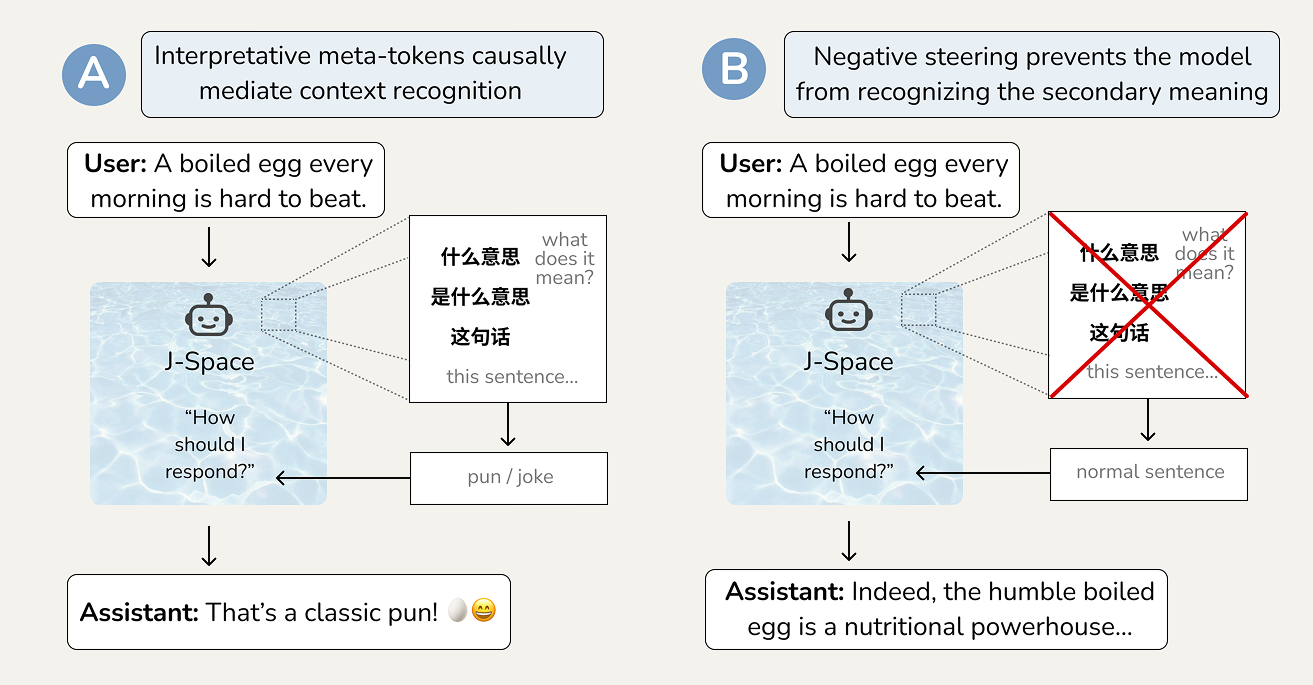
Researchers applied the J-lens interpretability technique to Qwen3.6-27B and discovered 'meta-tokens' — single tokens that reveal non-obvious internal computations, such as Chinese tokens firing when the model detects ambiguity or hedges. Steering these meta-tokens causally changes model outputs, e.g., suppressing a hedging token makes the model commit to a single answer. The work is a proof of concept that J-lens can surface algorithms, not just intermediate variables, with multi-token J-lens as the natural next step.
See more
agrepl is an open-source CLI framework for deterministic replay of AI agent executions, solving the reproducibility problem caused by LLM sampling variance and external API state. It intercepts all external interactions via a MITM proxy, serializes them as structured traces, and replays them in a fully isolated environment with zero network access. Evaluation across 250 replay instances shows perfect replay fidelity (F=1.0) and 98.3% median per-step latency reduction. The tool is implemented in Go and released under the MIT license.
See moreOpenLanguageModel (OLM) is an MIT-licensed PyTorch library for building and pretraining small language models with transparent, readable code. It supports tokenizers, streaming datasets, mixed precision, and CPU through multi-GPU execution, with 27 presets across nine model families. Validation shows 90.6% four-GPU weak-scaling efficiency for a 348M-parameter workload and close agreement with reference implementations.
See more
A hands-on tutorial demonstrating how to fine-tune the OpenVLA robot AI model using LoRA on Google Colab. Covers dataset preparation, Colab environment setup, training metrics, and Weights & Biases logging for reproducibility. Aimed at practitioners who want a reproducible 100-step fine-tuning workflow.
See moreHantaWatch is a federated learning framework enabling labs and surveillance sites to collaboratively train sequence-based models for Hantavirus genomic surveillance without sharing raw data. It integrates k-mer feature extraction, source-aware federated client construction, adaptive DU-FedProx optimization, and prediction-only triage. Experiments show it balances predictive performance, false-negative risk, and update stability across binary and multi-class tasks including high-risk screening and outbreak prediction.
See more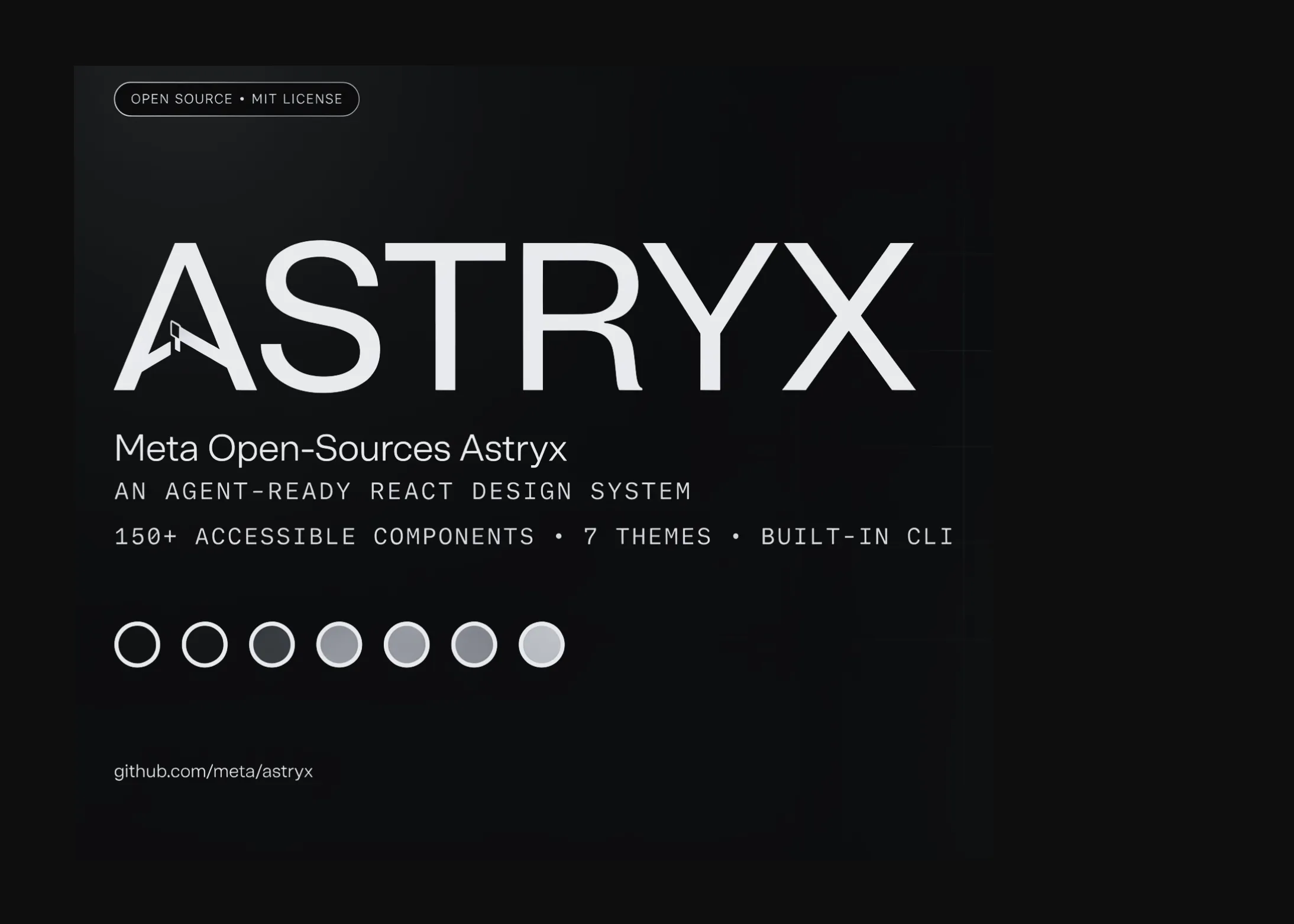
Meta has open-sourced Astryx, the React and StyleX design system used internally across 13,000+ apps for eight years. It includes 150+ accessible components, seven themes, dark mode, templates, and an agent-ready CLI under the MIT license. React 19+ is required.
See more
Google launched Gemini 3.5 Flash Cyber, a cost-efficient AI security model for finding and patching vulnerabilities, positioned as a cheaper alternative to larger models like Anthropic's Mythos. The model is available first to governments and trusted partners via CodeMender, Google's security-focused coding agent. It enables high-speed, low-cost scanning of more code paths by AI agents.
See more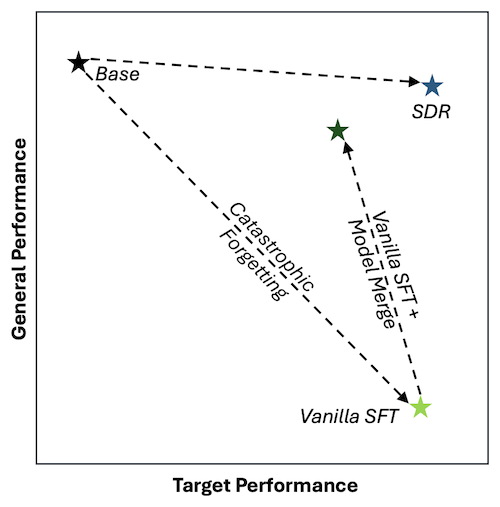
AWS introduces Self-Distilled Reasoning (SDR), a method for generating thinking tokens in SFT datasets that lack reasoning traces. The post examines the reasoning suppression problem, validates SDR across three benchmarks, and offers practical recommendations for practitioners fine-tuning Amazon Nova models.
See moreGitHub Code Quality is now generally available on GitHub Enterprise Cloud and GitHub Team. The feature addresses the challenge of maintaining code standards as AI accelerates code output. The announcement is brief but signals GitHub's response to AI-driven development workflows.
See more
Block launched Buzz, a free, open-source workspace that provides a Slack-like collaboration environment for humans and AI agents. Each agent receives its own identity 'passport' for managed participation. The tool aims to standardize how teams integrate autonomous agents into daily workflows.
See more
TechCrunch reports on improvements to the Model Context Protocol (MCP), a foundational interoperability standard that lets AI models securely access external data sources and services. MCP acts as shared plumbing so chatbots can reach calendars, databases, and internal tools without engineers building bespoke integrations for each connection. The article suggests upcoming changes will make the protocol easier to adopt.
See more
Thinking Machines Lab has released Inkling, a 975B-parameter multimodal Mixture-of-Experts model with 41B active parameters and a 1M-token context window. It is open-weights and designed for customizable multimodal reasoning, agentic AI, coding, tool use, and audio/vision tasks rather than benchmark dominance. The model targets developers building domain-specific applications on a flexible foundation.
See more
Rhoda AI is training robots using hundreds of millions of internet videos rather than curated lab data, via its Direct Video Action model. This approach could dramatically reduce the cost and scale barriers of robot learning. The article covers how the model translates video content into actionable robot behaviors.
See more
Hugging Face introduces Grabette, an open-source system for recording robot-manipulation data. The post appears on the Hugging Face blog but body content was unavailable at time of enrichment. Likely relevant to robotics researchers and ML engineers building manipulation datasets.
See more
Mira Murati's startup Thinking Machines has released a 975 billion parameter large language model with open weights, allowing public access to model weights for research and deployment. The release positions Thinking Machines as a significant competitor in the open-weight LLM space alongside Meta and others. Details on architecture, training data, and benchmark performance are available via the linked source.
See more
Tau is a minimal, educational Python coding agent from Hugging Face, designed as a readable reference for learning agent architecture. The video covers installation, a three-layer design pattern (tau_ai for model streaming, tau_agent for the loop harness, tau_coding for tools and TUI), model provider configuration, and durable session management. Install with `uv tool install tau-ai` and explore the open-source repo to understand how modern coding agents actually work.
See more