Google is Paying to Build AI Agents
Google is investing heavily in AI agent infrastructure. Here is what that means for builders.
Google is investing heavily in AI agent infrastructure. Here is what that means for builders.
Free resources that teach AI better than most paid courses. Save your money.
Claude usage analytics tool breakdown — track tokens, costs, and optimize your AI spend.
MCP connector from Higgsfield enables mass ad creative generation with AI agents.


Another ChatGPT trend is here People are turning their profiles into cute crayon-style cartoons using ChatGPT. The idea is simple. Upload a screenshot of your profile, paste the prompt, and let the model redraw the whole page as if it was made with crayons on white paper. The result keeps the profile layout, but turns the details into a playful handmade version filled with sweet childlike elements. It works because the output feels personal, nostalgic, and instantly shareable. Would you try this with your own profile?

Persistent memory in AI agents creates a new attack surface where prompt injections survive across sessions and re-enter context on every retrieval. Security researcher Johann Rehberger demonstrated SPAIware writing malicious instructions into ChatGPT's long-term memory, and the MemoryGraft paper shows poisoned experience records causing durable behavioral drift in autonomous agents like MetaGPT. Three key defenses apply: scope memory per instance, validate writes for injection patterns, and maintain per-entry provenance to enable surgical removal of poisoned entries.
See more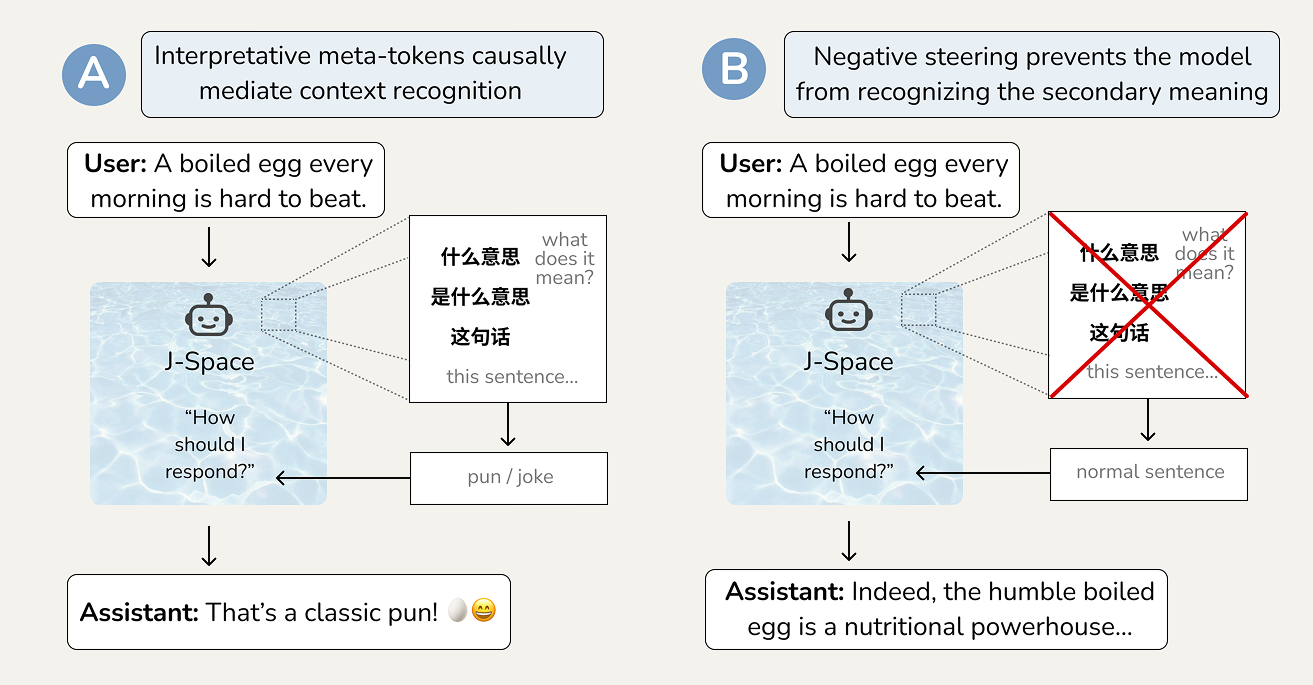
Researchers applied the J-lens interpretability technique to Qwen3.6-27B and discovered 'meta-tokens' — single tokens that reveal non-obvious internal computations, such as Chinese tokens firing when the model detects ambiguity or hedges. Steering these meta-tokens causally changes model outputs, e.g., suppressing a hedging token makes the model commit to a single answer. The work is a proof of concept that J-lens can surface algorithms, not just intermediate variables, with multi-token J-lens as the natural next step.
See more
agrepl is an open-source CLI framework for deterministic replay of AI agent executions, solving the reproducibility problem caused by LLM sampling variance and external API state. It intercepts all external interactions via a MITM proxy, serializes them as structured traces, and replays them in a fully isolated environment with zero network access. Evaluation across 250 replay instances shows perfect replay fidelity (F=1.0) and 98.3% median per-step latency reduction. The tool is implemented in Go and released under the MIT license.
See more![Tri-Net v2: Open-source implementation of our Scientific Reports paper on unified skin lesion and symptom-based monkeypox detection [R]](https://preview.redd.it/vwax5ludzheh1.png?width=140&height=79&auto=webp&s=25929233532a0110f28de21f8e7a57634c6f791b)
Researchers released Tri-Net v2, an open-source deep learning framework for monkeypox detection from skin lesion images and symptoms, accompanying their paper published in Scientific Reports (Nature Portfolio). The implementation includes leakage-free data pipelines, multiple CNN backbones with ensemble strategies, Grad-CAM explainability, Docker support, and a PyPI package for easy installation. The project emphasizes reproducibility with cross-validation, statistical evaluation, and CI/CD integration.
See moreOpenLanguageModel (OLM) is an MIT-licensed PyTorch library for building and pretraining small language models with transparent, readable code. It supports tokenizers, streaming datasets, mixed precision, and CPU through multi-GPU execution, with 27 presets across nine model families. Validation shows 90.6% four-GPU weak-scaling efficiency for a 348M-parameter workload and close agreement with reference implementations.
See more
A hands-on tutorial demonstrating how to fine-tune the OpenVLA robot AI model using LoRA on Google Colab. Covers dataset preparation, Colab environment setup, training metrics, and Weights & Biases logging for reproducibility. Aimed at practitioners who want a reproducible 100-step fine-tuning workflow.
See moreHantaWatch is a federated learning framework enabling labs and surveillance sites to collaboratively train sequence-based models for Hantavirus genomic surveillance without sharing raw data. It integrates k-mer feature extraction, source-aware federated client construction, adaptive DU-FedProx optimization, and prediction-only triage. Experiments show it balances predictive performance, false-negative risk, and update stability across binary and multi-class tasks including high-risk screening and outbreak prediction.
See more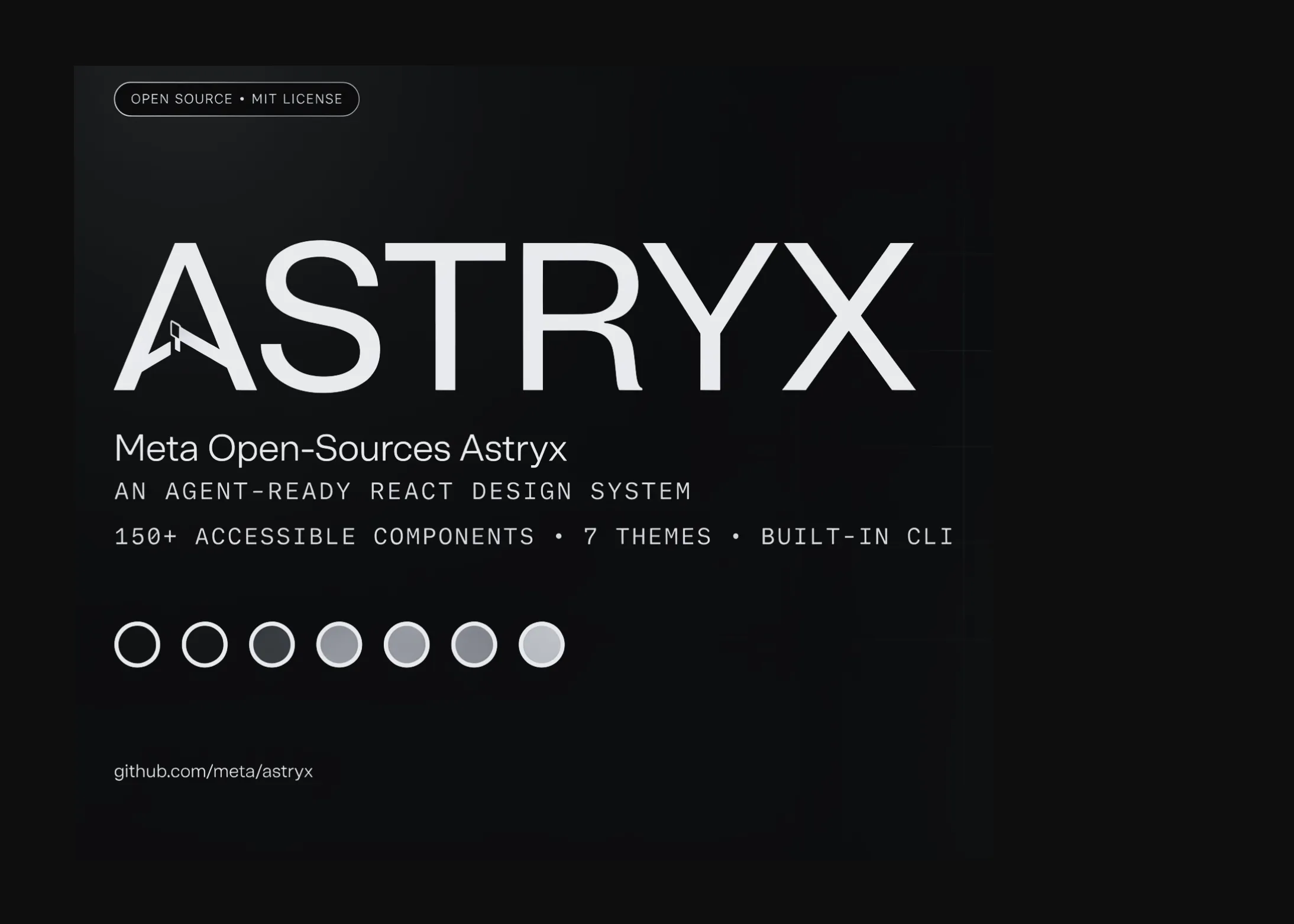
Meta has open-sourced Astryx, the React and StyleX design system used internally across 13,000+ apps for eight years. It includes 150+ accessible components, seven themes, dark mode, templates, and an agent-ready CLI under the MIT license. React 19+ is required.
See more
Google launched Gemini 3.5 Flash Cyber, a cost-efficient AI security model for finding and patching vulnerabilities, positioned as a cheaper alternative to larger models like Anthropic's Mythos. The model is available first to governments and trusted partners via CodeMender, Google's security-focused coding agent. It enables high-speed, low-cost scanning of more code paths by AI agents.
See more
AWS demonstrates how to build a voice-based restaurant ordering agent using Amazon Bedrock AgentCore and Nova 2 Sonic for real-time speech. The system connects to a restaurant backend via Model Context Protocol and bridges phone calls through a SIP gateway on ECS/Fargate. The walkthrough includes AWS CDK deployment and a session-warming technique so callers never hear dead air.
See more
Vercel is acquiring Better Auth, the company behind the open source TypeScript authentication library with 4.7M+ weekly npm downloads and 850+ contributors. Founder Bereket Engida and the core team join Vercel to advance agent identity, enabling each AI agent to carry its own scoped, revocable authority rather than running under a shared user identity. The library remains free and MIT-licensed with the same community governance and framework-agnostic support.
See more
Tau is a minimal, educational Python coding agent from Hugging Face, designed as a readable reference for learning agent architecture. The video covers installation, a three-layer design pattern (tau_ai for model streaming, tau_agent for the loop harness, tau_coding for tools and TUI), model provider configuration, and durable session management. Install with `uv tool install tau-ai` and explore the open-source repo to understand how modern coding agents actually work.
See more
Colin Francis from LangChain demonstrates Dynamic Subagents in Deep Agents, enabling programmatic orchestration of parallel agents through code instead of agent coordination. The video walks through six production patterns—Classify and Act, Fan Out and Synthesize, Adversarial Verification, Generate and Filter, Tournament, and Loop Until Done—with live LangSmith traces for each. This approach provides reliable multi-agent scaling with deterministic control flow.
See more
Vercel released five products for the agent era: eve, an open-source agent framework; Vercel Connect for secure integrations; Vercel Agent for autonomous production monitoring; and enterprise governance tools. Agent-triggered deployments grew 17x in six months—half of all Vercel deployments will soon be agent-driven. The keynote demos building and deploying an agent in five minutes, plus autonomous incident investigation and remediation.
See more
Hugging Face shares lessons learned from building Shippy, an AI agent system. The post covers practical insights on agent architecture, tool integration, and deployment challenges encountered during development. It serves as a case study for teams building their own agent-based products.
See more
DeepSeek's DSpark uses semi-autoregressive speculative decoding to accelerate LLM inference 50–400% without retraining by having a small draft model propose token blocks while a large model verifies them in parallel. Overcomes limitations of prior autoregressive and parallel methods through improved block acceptance and confidence-scheduled verification. Production-ready with open-source DeepSpecs repo and validated on V4 models, Qwen, and Gemma.
See more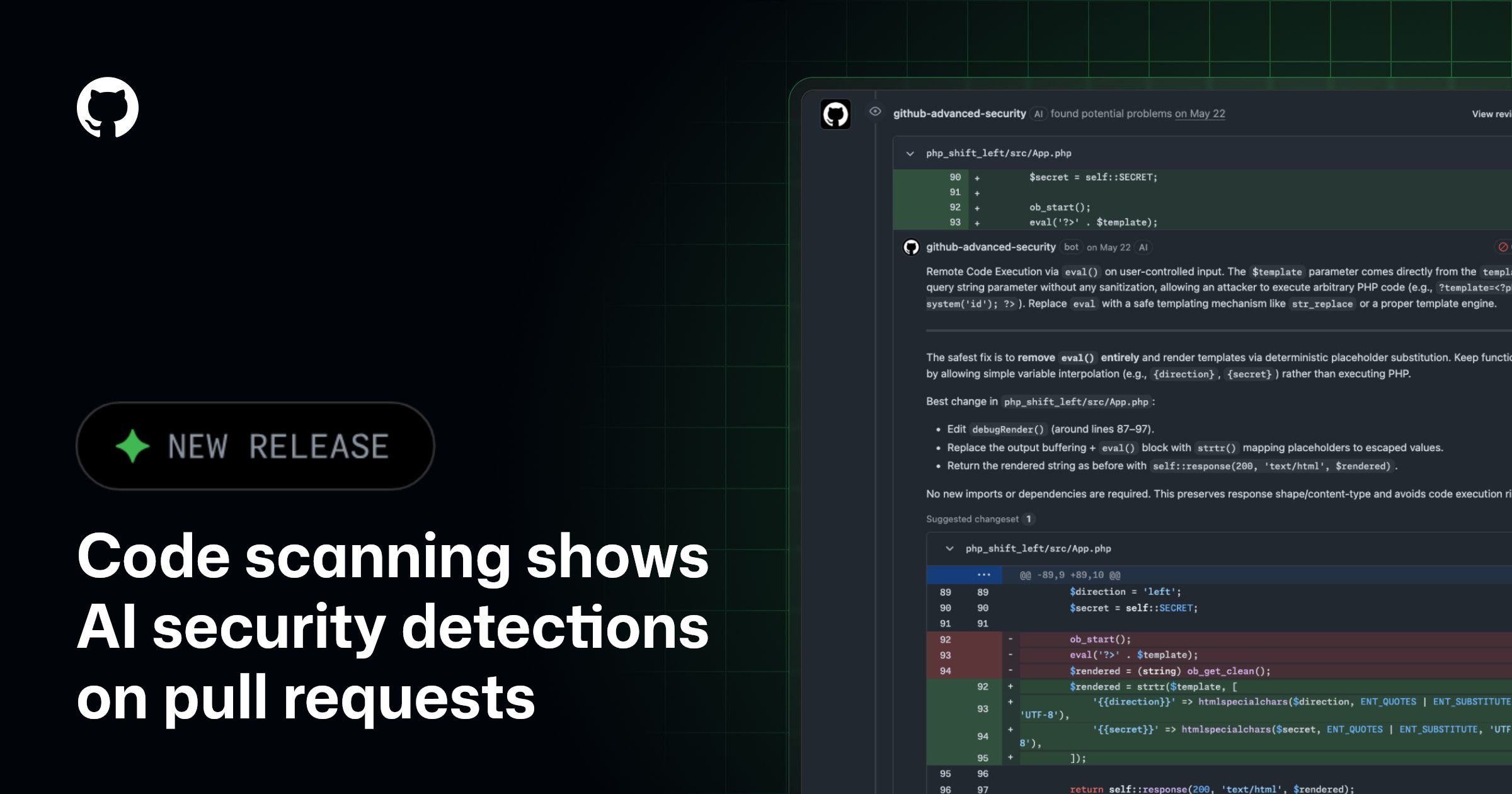
GitHub has expanded its code scanning feature to surface AI-powered security detections directly on pull requests. This extends vulnerability coverage to languages and frameworks not currently supported by CodeQL, helping development teams catch security issues earlier in the review process. The feature aims to broaden automated security analysis across more of the codebase.
See more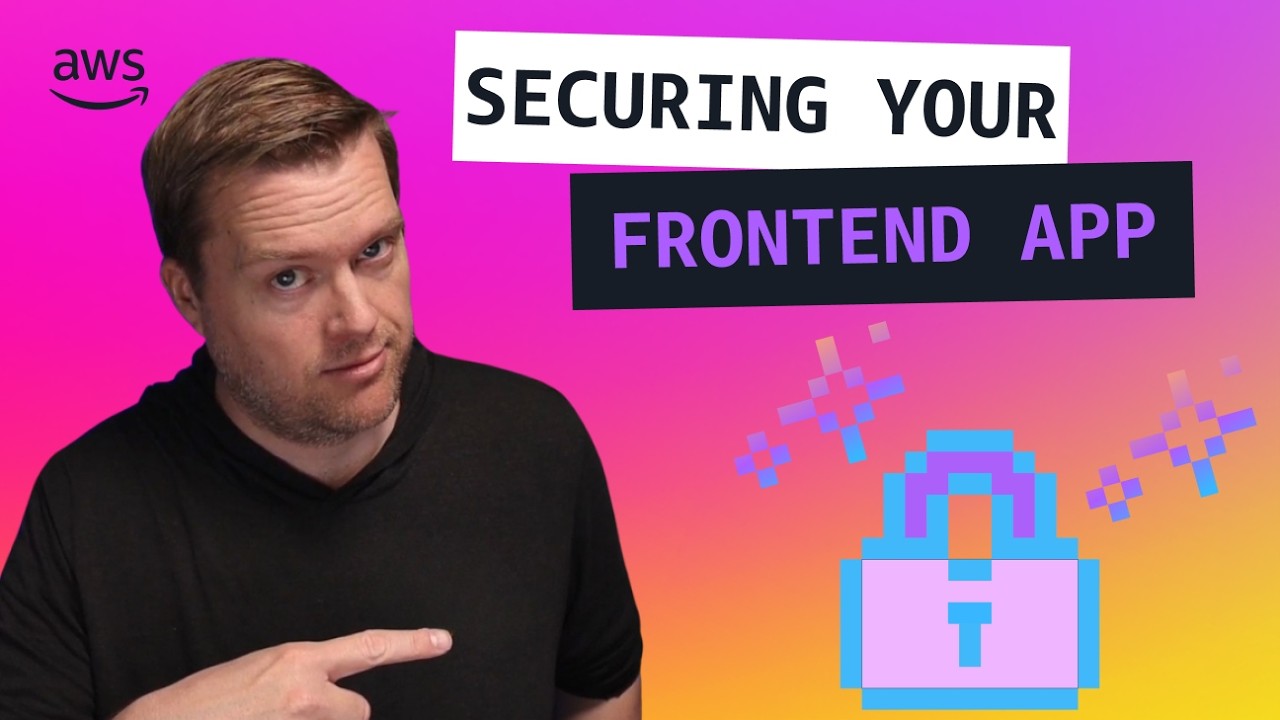
AWS Developers presents a layered defense approach to frontend security, covering XSS prevention, authentication/authorization, secrets management, npm supply-chain security, and AWS WAF. The presenter demos real vulnerabilities in a React app and fixes each layer step-by-step using AWS Cognito and IAM. Practical guide for building secure React applications with defense-in-depth architecture.
See more
Alex Reisner investigates how AI companies acquire and process training data from the open web, academia, and online platforms. The episode covers Common Crawl indexing, content filtering, and fair compensation debates. Core insight: training data acquisition remains the AI industry's least transparent and most ethically contested challenge.
See more
Meta's Brain2Qwerty v2 decodes brain signals into text without invasive surgery, achieving 61% word accuracy—approaching performance of surgical implants. The breakthrough offers new hope for individuals with communication impairments. Meta is releasing the code open-source to foster collaborative neuroscience research and deepen understanding of neurological disorders.
See more