Dev.to
6/28/2026

The original title is about speculative decoding and when it's worth using. Let me rewrite this as a punchy mobile feed headline.
Original: Lossless, But Not Free: The Lossless, But Not Free — When Speculative Decoding Actually Pays Off (and When It Doesn't)
Short summary
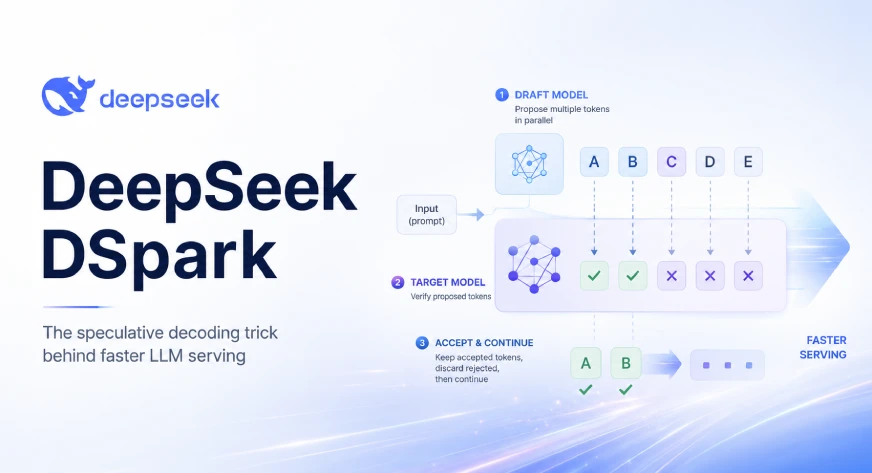
Speculative Decoding speeds up LLM inference 60-85% only when the draft model's acceptance rate exceeds its compute cost—typically 2.5+ tokens per round. Well-matched model pairs on code and structured text achieve this; unmatched pairs or high-entropy tasks drop below profitability and run slower. Measure your own acceptance rate per task before trusting vendor benchmarks—instrumentation determines if speedup is real for your workload.
- •Speculative Decoding profit depends on acceptance rate exceeding 1 + α + β (draft cost + verification overhead)
- •Distribution shift is the production risk: mismatched models on high-entropy tasks achieve <10% acceptance and lose compute
- •Measure your actual a per task type using existing framework counters (TensorRT-LLM, vLLM, HF); 500+ samples required for confidence
Generated with AI, which can make mistakes.
Is this a good recommendation for you?