Google is Paying to Build AI Agents
Google is investing heavily in AI agent infrastructure. Here is what that means for builders.
Google is investing heavily in AI agent infrastructure. Here is what that means for builders.
Free resources that teach AI better than most paid courses. Save your money.
Claude usage analytics tool breakdown — track tokens, costs, and optimize your AI spend.
MCP connector from Higgsfield enables mass ad creative generation with AI agents.


Another ChatGPT trend is here People are turning their profiles into cute crayon-style cartoons using ChatGPT. The idea is simple. Upload a screenshot of your profile, paste the prompt, and let the model redraw the whole page as if it was made with crayons on white paper. The result keeps the profile layout, but turns the details into a playful handmade version filled with sweet childlike elements. It works because the output feels personal, nostalgic, and instantly shareable. Would you try this with your own profile?

OpenLanguageModel (OLM) is an MIT-licensed PyTorch library for building and pretraining small language models with transparent, readable code. It supports tokenizers, streaming datasets, mixed precision, and CPU through multi-GPU execution, with 27 presets across nine model families. Validation shows 90.6% four-GPU weak-scaling efficiency for a 348M-parameter workload and close agreement with reference implementations.
See more
A step-by-step Laravel tutorial for building verifiable PDF certificates using Blade views, inline SVG QR codes, and UUID-based verification routes. The certificate is rendered as a vector PDF with a QR code linking to a public verification page, and delivered via email. The article compares three PDF rendering approaches—DomPDF, Browsershot, and an HTML-to-PDF API—recommending the API route for design fidelity without server-side Chrome overhead.
See more
StatQuest introduces linear programming and the Simplex Algorithm using real-world optimization scenarios: airline scheduling, warehouse management, and crop planning. The 24-minute educational video explains fundamental concepts and demonstrates the Simplex method's key ideas with detailed examples. Content from a reputable channel with Gurobi solver sponsorship and free academic tier.
See more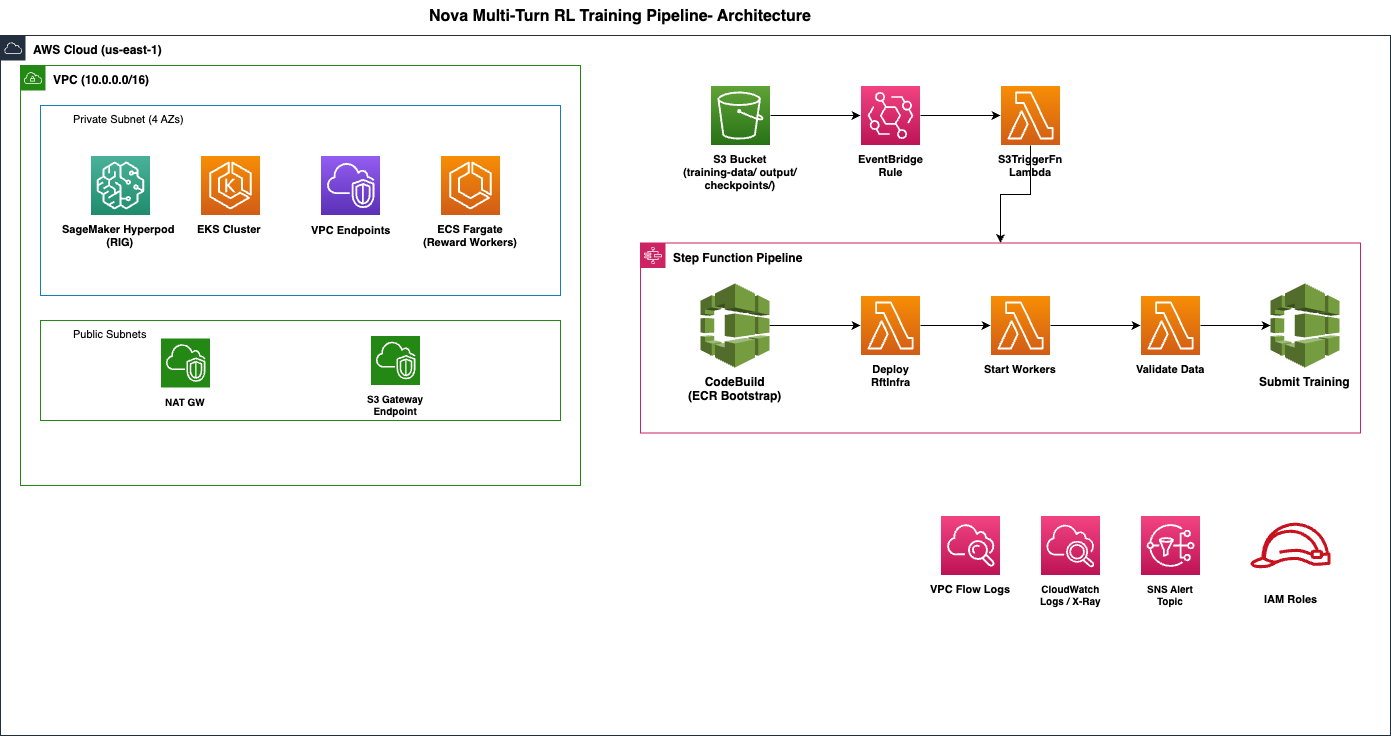
Deploy multi-turn reinforcement learning infrastructure using Amazon Nova Forge on Amazon SageMaker HyperPod with fully event-driven automated training pipelines. This guide walks through a two-phase architecture setup that triggers training jobs whenever data is uploaded to S3, using Wordle as a concrete example RL task. Perfect for teams building custom reinforcement learning applications on AWS managed infrastructure.
See more
Demonstrates end-to-end GRPO fine-tuning workflow for Gemma-3 on mathematical reasoning using LoRA adapters and GSM8K reward functions. Covers environment setup, baseline evaluation, policy improvement through group sampling, and model export. Practical guide for practitioners building AI systems with structured reasoning capabilities.
See more
This 27-minute educational video from AWS Developers explains how Docker containers and Amazon ECS solve the "works on my machine" problem while enabling consistent, scalable infrastructure deployment. The content progresses from container fundamentals and Docker image-building through the EC2 vs Fargate architectural trade-offs, with a concrete shopping-app example demonstrating Black Friday auto-scaling. Designed for operations and infrastructure professionals building production systems on AWS.
See more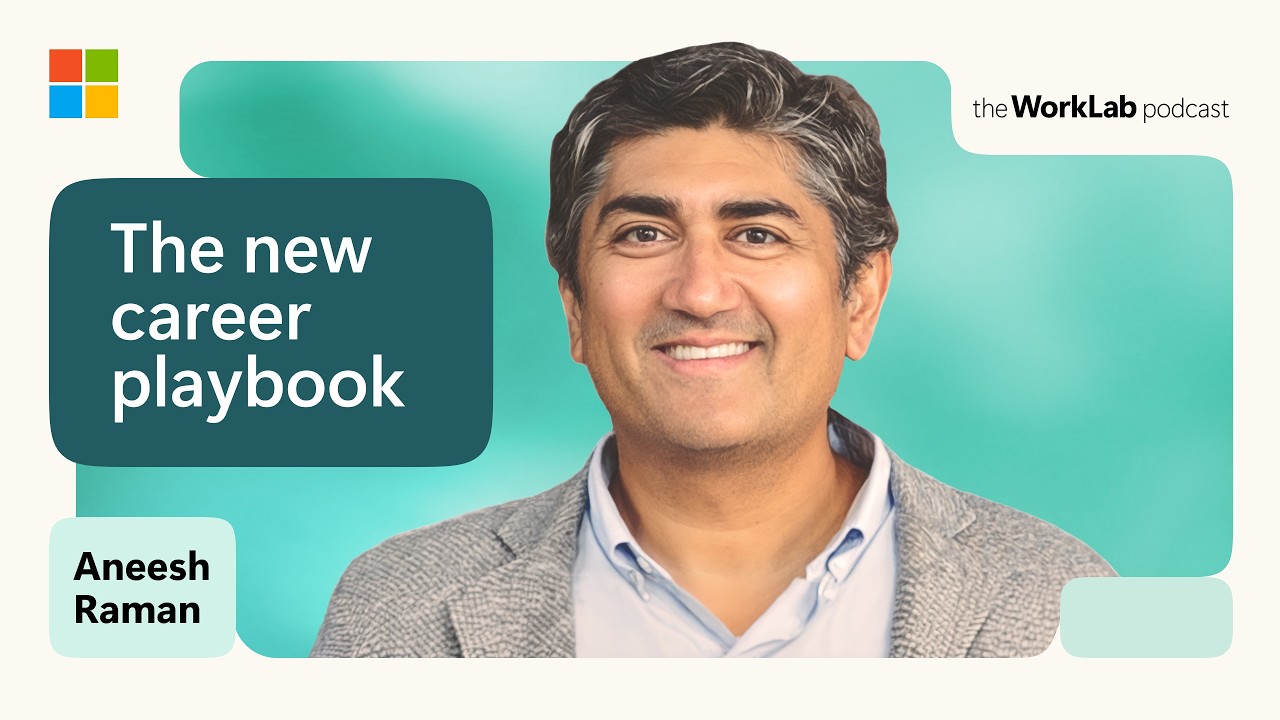
LinkedIn's Chief Economic Opportunity Officer Aneesh Raman argues that traditional job titles are being reshaped, not eliminated by AI. What matters now is curiosity, adaptability, action, and 'onlyness'—your unique combination of skills and perspective. The episode explores why companies must fundamentally redesign how work gets done, not just adopt AI tools, and why individuals willing to move first will lead in the AI era.
See more
Google's Gemini Omni Flash API (preview) enables video generation and multi-turn editing with targeted edits—swapping backgrounds, removing objects, adding synced effects. Pricing is ~10¢/second with 10-second duration and 720p output limits. Tutorial covers API setup, prompting best practices (shot, motion, style, lighting), animating up to seven reference images for character consistency, and platform safety filters on celebrity mentions and audio.
See more
The April 2025 Executive Order prioritizing U.S. maritime dominance creates strong EB-2 NIW opportunities for naval architects, marine engineers, and shipyard professionals who can link their experience to federal shipbuilding and national security priorities. A recent case study demonstrates how to frame decades of maritime expertise against specific federal workforce and technology gaps. The order's policy context—backed by $5B in foreign investment and sustained defense contracts—strengthens the national-importance argument needed for NIW approval.
See moreVirtueMap, a new evaluation framework, measures LLM behavior across five Aristotelian virtues—Practical Wisdom, Justice, Truthfulness, Courage, and Temperance—by ranking responses to ethical dilemmas. Testing nine major LLM families revealed 90.3% rank consistency overall, with the largest differences in Courage, Temperance, and Justice. An interactive website lets users generate their own virtue profiles and compare them directly with measured LLM profiles.
See moreThis paper proposes Phase-Aware Knowledge Tracing (PAKT), which decomposes student interactions into ability-building and proficiency-oriented phases rather than treating all interactions uniformly. It uses a multi-branch Transformer with type-aware readout to capture phase-specific knowledge states and provides causal analysis of confounding bias in phase-agnostic models. Experiments on six benchmarks show consistent improvements with up to 1.33% AUC gain over baselines.
See more
Vercel teaches AI agents product design decisions by encoding them as structured documentation and lint rules in the codebase. Rather than leaving design context in Slack threads and PRs, they treat accepted decisions as code—routing agents to canonical sources, validating changes with deterministic checks, and testing generalization with evals. Other teams can adapt this framework to their own standards.
See more
LlamaIndex presents a live technical walkthrough of building retrieval infrastructure for enterprise agents, demonstrating how semantic search, server-side filtering (grep), and file-level navigation work together within unified agent reasoning loops. The 69-minute hands-on session covers production-ready patterns for scaling retrieval systems across large document bases. Essential viewing for product managers, engineers, and founders building sophisticated AI agents for enterprise knowledge retrieval.
See more
Berkeley BAIR Lab celebrates 2026 Ph.D. graduates whose research spans robotics, embodied intelligence, large language models, computer vision, and AI safety. Graduates are moving to senior roles at OpenAI, Physical Intelligence, Amazon, and into faculty positions, with several founding startups. The cohort demonstrates the breadth of current AI research frontiers and the distribution of emerging talent across industry, academia, and entrepreneurship.
See more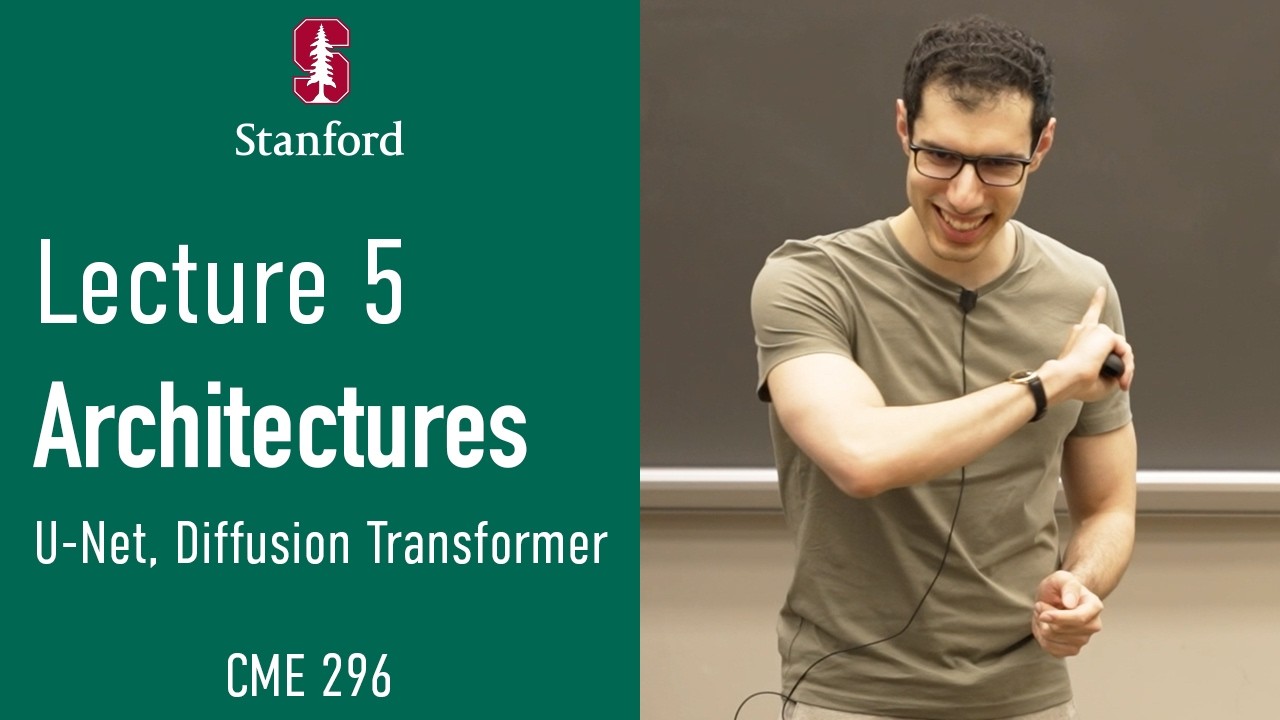
Stanford graduate lecture on diffusion models and large vision architectures, covering U-Net evolution, Diffusion Transformers (DiT), multimodal variants, and advanced positional encoding techniques. Requires deep neural network background; designed for AI product builders and researchers.
See more
Anthropic introduces Natural Language Autoencoders (NLAs), converting opaque LLM activations into readable text explanations. Applied to Claude Opus 4.6, NLAs revealed hidden reasoning—like evaluation awareness and deception avoidance—that models think but don't verbalize. Code and trained models released for community research on model interpretability.
See more
Cisco's Customer Experience team shared how they scale AI agents to handle 16M interactions yearly by closing the feedback loop from production signals directly back to code merges. The system uses AI triage agents for diagnostics and human oversight only for write decisions, not reads, addressing the bottleneck at scale. Key takeaway: treat evals as infrastructure and use MCPs to integrate feedback signals with code systems.
See more
RAISE US, a newly formed $500M bipartisan nonprofit led by former Commerce Secretary Gina Raimondo and ex-Governor Eric Holcomb, is launching to address anticipated job losses from AI advancement. The organization plans to collaborate with states and corporations on worker retraining and upskilling programs. This signals growing policy-level recognition of AI's workforce displacement and the need for proactive adaptation strategies.
See more
Hugging Face livestream for beginners covers running AI models locally on personal hardware. Expert speakers explain llama.cpp internals, quantization techniques for smaller models, choosing quantized variants (GGUFs), and comparing open frameworks (Pi, Gemma) with closed options (Claude, Codex). Live demos show automated PR triage using open models, with a live AMA on deployment strategies and hardware requirements.
See more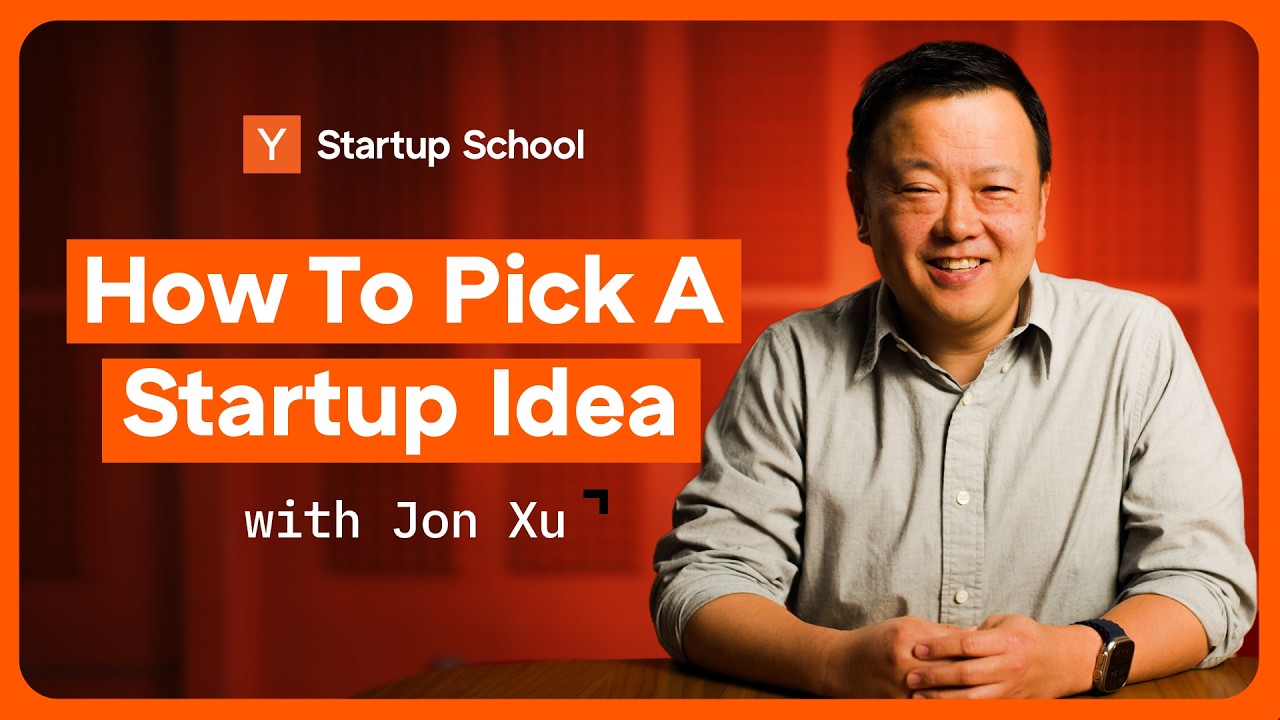
YC General Partner Jon Xu argues the perfect startup idea doesn't exist in the abstract—it emerges from commitment and customer depth. Pick one idea, commit fully, and get deep enough to practically run your customer's business. This customer-intimate approach surfaces genuinely better ideas than abstract searching.
See more