Google is Paying to Build AI Agents
Google is investing heavily in AI agent infrastructure. Here is what that means for builders.
Google is investing heavily in AI agent infrastructure. Here is what that means for builders.
Free resources that teach AI better than most paid courses. Save your money.
Claude usage analytics tool breakdown — track tokens, costs, and optimize your AI spend.
MCP connector from Higgsfield enables mass ad creative generation with AI agents.


Another ChatGPT trend is here People are turning their profiles into cute crayon-style cartoons using ChatGPT. The idea is simple. Upload a screenshot of your profile, paste the prompt, and let the model redraw the whole page as if it was made with crayons on white paper. The result keeps the profile layout, but turns the details into a playful handmade version filled with sweet childlike elements. It works because the output feels personal, nostalgic, and instantly shareable. Would you try this with your own profile?

Persistent memory in AI agents creates a new attack surface where prompt injections survive across sessions and re-enter context on every retrieval. Security researcher Johann Rehberger demonstrated SPAIware writing malicious instructions into ChatGPT's long-term memory, and the MemoryGraft paper shows poisoned experience records causing durable behavioral drift in autonomous agents like MetaGPT. Three key defenses apply: scope memory per instance, validate writes for injection patterns, and maintain per-entry provenance to enable surgical removal of poisoned entries.
See more
PlanFlip introduces four planning-phase prompt injection attacks against multi-agent LLM systems that corrupt downstream sub-tasks via the Planner agent. Testing nine frontier LLMs across 3,479 episodes reveals that stronger models like GPT-5 are more vulnerable (ASR=0.68), homogeneous pipelines have a correlated-agent blind spot, and reasoning-augmented models like DeepSeek-R1 resist injections. The authors propose two defenses—GoalAnchorCheck and CrossAgentConsensus—achieving detection rates up to 1.00, concluding that heterogeneous model diversity is a security prerequisite.
See more
A VentureBeat survey of 157 enterprises reveals a critical agent evaluation gap: 50% have shipped AI agents that passed internal evaluations but then failed in production, and only 5% fully trust automated evaluation today. Despite this, 66% already allow or are engineering toward zero-human-in-the-loop deployment for low-risk agents. The core problem is not evaluation coverage but reality alignment — evaluations pass agents that fail real customers, and autonomy is scaling faster than assurance.
See more
A hands-on tutorial demonstrating how to fine-tune the OpenVLA robot AI model using LoRA on Google Colab. Covers dataset preparation, Colab environment setup, training metrics, and Weights & Biases logging for reproducibility. Aimed at practitioners who want a reproducible 100-step fine-tuning workflow.
See more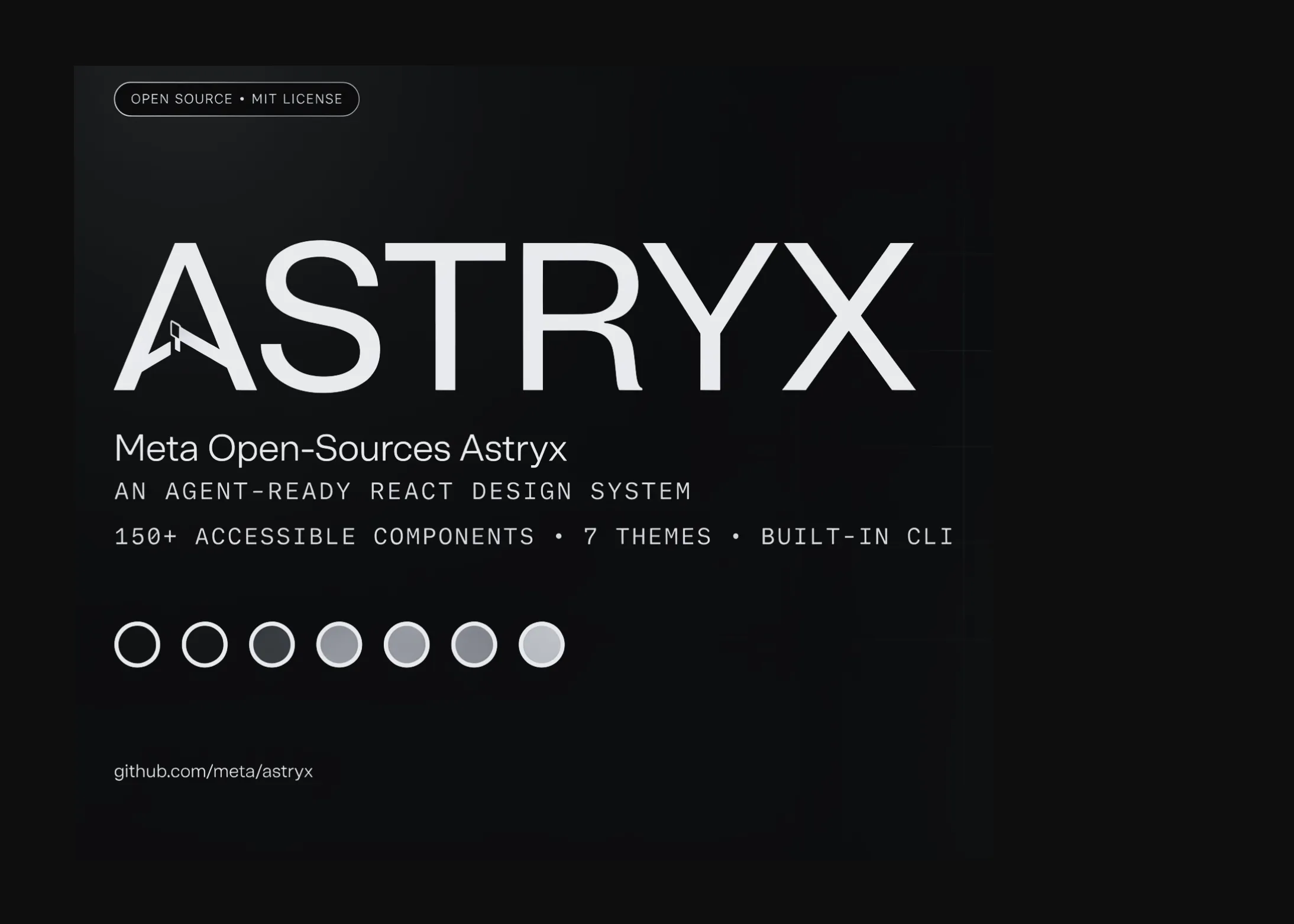
Meta has open-sourced Astryx, the React and StyleX design system used internally across 13,000+ apps for eight years. It includes 150+ accessible components, seven themes, dark mode, templates, and an agent-ready CLI under the MIT license. React 19+ is required.
See more
Google launched Gemini 3.5 Flash Cyber, a cost-efficient AI security model for finding and patching vulnerabilities, positioned as a cheaper alternative to larger models like Anthropic's Mythos. The model is available first to governments and trusted partners via CodeMender, Google's security-focused coding agent. It enables high-speed, low-cost scanning of more code paths by AI agents.
See moreMSCE is a training-free framework that converts LLM agent experience traces into reusable, callable skills with evidence links and reliability estimates. It uses reflection-weighted value backfilling to propagate sparse terminal feedback into dense local self-reflections, calibrating trace values for governing memory and skill evolution. Experiments on EvoAgentBench and LoCoMo show MSCE outperforms state-of-the-art skill-augmented and memory-driven baselines with strong cross-domain transferability.
See more
Over the past nine months, Amazon, Microsoft, and Google have each launched or rebranded enterprise agent platforms that are converging on a shared architectural pattern. This trend signals a maturing market where multi-agent orchestration, tool integration, and enterprise guardrails become standard. Leaders evaluating agent platforms should watch this convergence as a sign of emerging industry standards.
See more
Vercel's AI Gateway now supports Gemini 3.6 Flash and Gemini 3.5 Flash-Lite. Gemini 3.6 Flash improves coding, agentic tasks, and web development output while consuming fewer tokens. Gemini 3.5 Flash-Lite upgrades agentic capabilities for scoped subagent tasks. Both are accessible via the AI SDK with no platform markup on inference.
See more
Colorado replaced its 2024 AI law with narrower regulation SB 26-189 (effective Jan 1, 2027) requiring notice and explanations for automated decisions affecting education, employment, housing, finance, insurance, healthcare, and government services. Violations carry $20K fines enforced by Colorado AG. The shift followed xAI's federal lawsuit, which prompted DOJ intervention.
See more
Tradeshift replaced its legacy BI tool with Amazon Quick's agentic AI capabilities, achieving query response times up to 30x faster and a 40% reduction in total cost of ownership. The shift also turned embedded analytics into a revenue-generating product. The post provides a concrete case study of migrating from traditional BI to agentic AI.
See more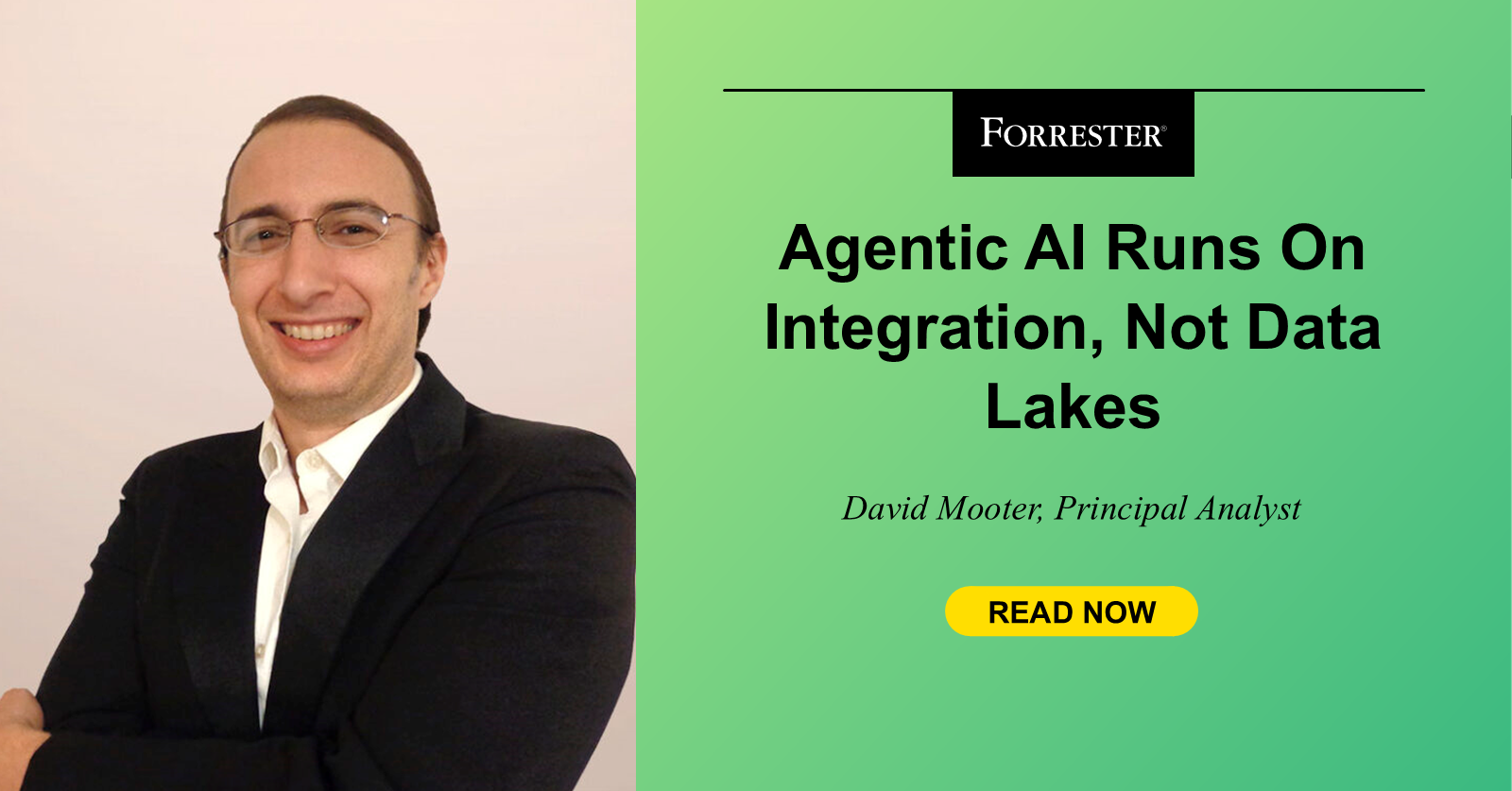
Agentic AI deployments require robust integration infrastructure to enable agents to take action, not just answer questions. Many enterprises are repeating past mistakes by focusing on data lakes rather than integration architecture. Organizations must prioritize integration to move AI agents from experimentation to real production value.
See moreAlex Lieberman, founder of Morning Brew, shares a Claude-powered content workflow that interviews him before drafting, encodes his voice in Markdown, and runs a six-persona revision loop before publishing. The system is designed to produce high-quality content at scale without sounding generic or AI-generated. This is a practical playbook for creators and marketers building repeatable AI content pipelines.
See moreBPO is a new RL algorithm that exploits the deterministic, snapshottable nature of agent sandboxes by building a single branching tree instead of N independent rollouts. It snapshots at high-entropy decision points, forks alternative actions, and computes advantages from sibling returns. On WebShop, ALFWorld, and SWE-bench, BPO improves success by 3.6–6.1 points over GRPO/RLOO at matched compute and matches the best baseline with 38% fewer updates.
See more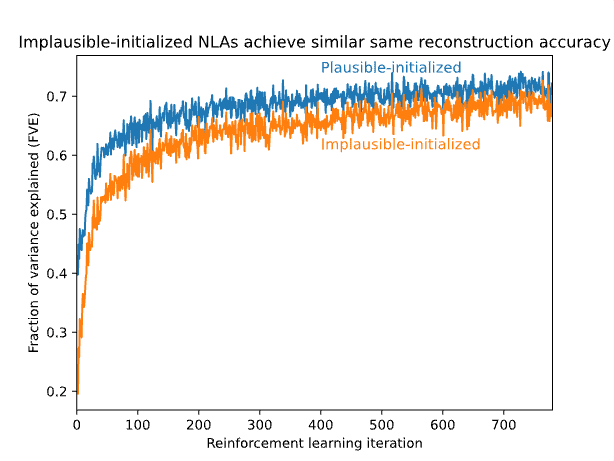
Natural language autoencoders claim to interpret LLM activations as plain text explanations. This study reveals NLAs maintain reconstruction accuracy even with implausible initializations, and training decreases plausibility in well-initialized models—questioning whether NLAs reliably capture actual model reasoning.
See more
LangChain demonstrates building a production-grade agent evaluation pipeline using Harbor sandboxes and LangSmith observability platform. The video shows moving from local testing to scaled, parallel agent evaluations with full tracing and isolated execution environments. Harbor provides dataset management and sandbox isolation, while LangSmith handles experiment tracking and detailed trace visualization.
See more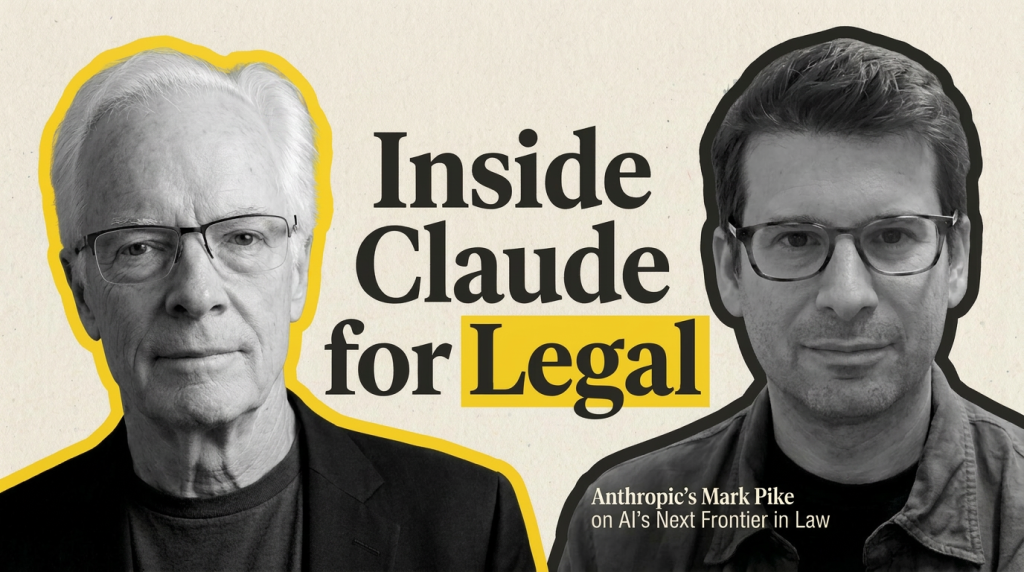
Anthropic launched Claude for Legal in May 2026 with 20+ MCP connectors and a dozen practice-area plugins, representing the company's most explicit commitment to the legal industry. The specialized tool suite addresses legal workflows and has reignited debate about AI's role in professional services. The article features an interview with Anthropic executive Mark Pike on the strategic vision and technical architecture.
See more
As AI inference costs plummet (~50x annually), the era of near-free intelligence enables new workload patterns: agentic speculation (agents performing thousands of exploratory queries), agent swarms requiring coordination and state management, and agents generating custom data systems. Rethinking data systems for these agentic users—not humans—becomes critical infrastructure. Traditional databases assume human queries; agents perform high-volume exploratory work that can be optimized through result reuse, approximate answers, and higher-level primitives.
See more
Anthropic announced Claude Science at a pharma-focused event, positioning it as a flagship product for scientific research that autonomously executes high-level instructions, similar to Claude Code's software engineering support. The launch targets pharmaceutical executives, biotech founders, and researchers. This marks Anthropic's expansion from coding assistance into specialized scientific workflows.
See more
NVIDIA released BioNeMo Agent Toolkit, enabling AI agents to execute hands-on scientific work in biology and chemistry using real tools—protein shape prediction, drug binding analysis, genetic sequencing, and lab experiment suggestions. Major adopters include Eli Lilly, Schrödinger, and Databricks; Anthropic and OpenAI are integrating it into their systems. The toolkit solves a core AI limitation: general chatbots lack the ability to autonomously select and use specialized research tools.
See more